The best time to visit Escondido Falls depends more on recent rain than on the calendar. A dry spell can leave you with only a trickle.
This guide helps you read the conditions before you drive out and cross the creek.
Late winter and spring give you the best chance of seeing Escondido Falls flowing
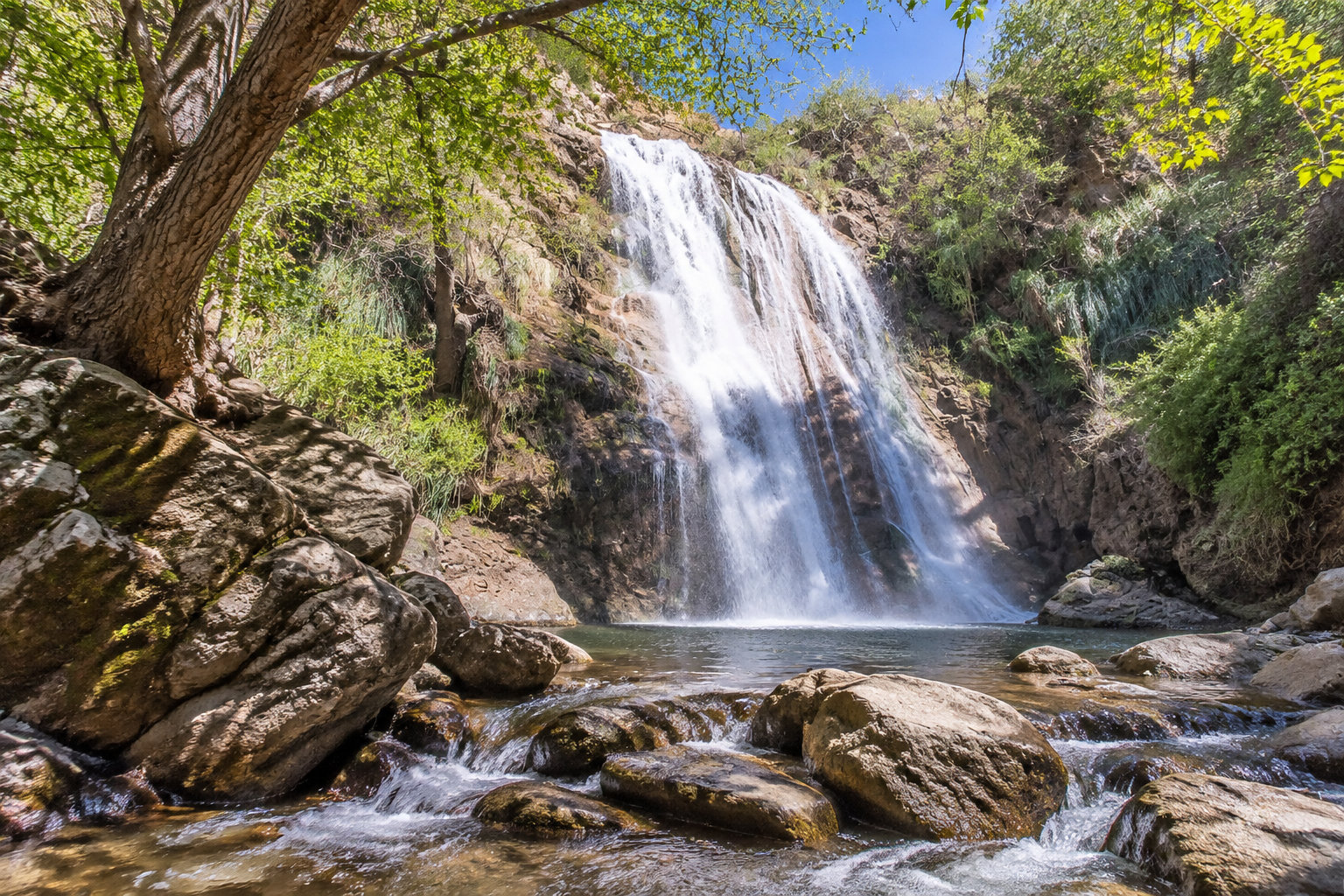
Escondido Falls runs on rain. Plan your trip around it. Late winter through spring is usually your best window, especially after a wet stretch. Late summer and fall often bring little water, sometimes a waterfall that is barely there.
Malibu’s wet season runs from late autumn into spring. But rainfall swings widely from year to year. A date on the calendar will not tell you how much water is coming down the canyon.
Recent rain matters more than the month. After an unusually dry winter, even a spring visit can deliver only a thin cascade.
| When you go | What you can expect | Best use of the visit |
|---|---|---|
| Late winter, after recent rain | The best chance of a substantial waterfall, with wetter crossings and slick ground | Go for waterfall photos, but check weather and access first |
| Spring, after a wet winter | Good flow, greener canyon vegetation, and seasonal wildflowers | The best balance of scenery, water, and comfortable temperatures |
| Summer and early fall | Escondido Creek can run dry, and the waterfall may be minimal or gone | Go for the canyon walk, not a guaranteed waterfall |
| After a dry spell | Low or no flow is possible even in a traditionally wet season | Wait for meaningful rain, then recheck trail conditions before driving to Malibu |
Before you leave
- Check the MRCA Escondido Canyon Park page
- Check the Los Angeles County trail listing
- Look for official closure notices
- Confirm recent rain and current trail conditions
Current trail information and official closure notices count for more than photos from an earlier season.
Rain increases the flow but makes the creek crossings harder
Once you leave the paved section, the trail crosses Escondido Creek several times. The exact count depends on the route. It also depends on how minor crossings are counted. Plan on more than one ford.
In dry weather, you can often step across on rocks. After rain, water may cover those stones. Logs turn slick. Sections that look shallow can carry a stronger current than you expect.
Runoff from rain upstream can reach the canyon even when the trail only looks damp, so keep an eye on the creek.
To cross safely:
- Do not enter a flowing crossing above your ankles.
- Keep your pack on, but loosen the waist and chest straps so it cannot pull you under if you fall.
- Wear shoes with firm grip, and expect them to get wet.
- Test each rock before you put your weight on it, and cross one person at a time.
Hiking poles help with balance, but they do not make a fast or deep crossing safe.
Mud is most likely on the canyon floor and along the creek after recent showers. Wet limestone, exposed roots, and fallen branches slow the final approach. Allow more time than you would on a dry trail.
The first stretch follows Winding Way. It is a paved residential road with blind curves and little room for pedestrians. Stay on the designated walking side and watch for traffic.
Before you leave, check the National Weather Service forecast for Malibu. Check for any flash flood warnings too. The MRCA sometimes closes parkland during fire-weather and other emergencies. Confirm that Escondido Canyon Park is open the day you go.
When to turn back
- Rain starts while you are in the canyon.
- The creek rises.
- The trail surface begins to slide.
- You cannot see a safe route across.
A smaller waterfall is not worth crossing if you cannot see a safe route across.
The hike covers about 4.2 miles and uses paid parking
The Edward Albert Trail runs about 4.2 miles round trip to the lower waterfall. Plan two to three hours, and more after rain.
- Start: the public lot near the junction of Pacific Coast Highway and Winding Way, about one mile south of Kanan Road. Walk uphill along Winding Way for about a mile, then follow the Edward Albert Escondido Canyon Trail into the canyon.
- Parking: $12 at the Winding Way lot. Carry a payment method the lot accepts, and do not assume roadside parking on Pacific Coast Highway is legal.
- Destination: the lower tier of Escondido Falls, where public parkland ends. The full system is often described as roughly 150 feet high, but the upper falls are closed to the public.
The lot is small. It fills on busy weekends and holidays. Arrive early, especially after recent rain.
Before you leave the car park
- Carry a payment method the lot accepts for the $12 parking fee.
- Plan two to three hours for the round trip, and more after rain.
- Arrive early, especially after recent rain.
- Check for falling rocks, surging water and slick limestone before you approach the base.
Do not climb toward the middle or upper levels. The habitat there is fragile, and the steep terrain carries a serious fall risk.
Stay back from the base if rocks are falling, water is surging, or spray has made the limestone slick. Keep children close around the creek and pool. Never enter the water to get nearer the cascade.
Before you go, check the weather, the forecast and the park’s status on the day itself, not the week before. If rain is falling or the creek is rising when you reach the lot, the sensible choice is to postpone the visit and come back once the canyon has settled.
Frequently Asked Questions
Can you bring a dog to Escondido Falls?
Dogs are allowed in Escondido Canyon Park on a leash, but leave a nervous or older dog at home if slippery surfaces are a concern.
The wet, rocky trail and several creek crossings are hard on dogs that struggle with slippery surfaces, so leave a nervous or older dog at home.
Can you drink water from Escondido Creek?
No. Do not drink from the creek or the waterfall, even if the water looks clear.
Natural water can carry bacteria and other contaminants, so bring all the drinking water you need for the hike.
Can you swim at Escondido Falls?
No. The lower pool is not a reliable swimming area, and the accessible falls are too shallow for swimming.
The rocks around the cascade are slippery, so treat the pool and the base of the falls as viewing areas only.