No sunscreen label promises sweatproof protection; check the tested water-resistance period instead.
Sweat and wiping your face shorten that window. A bottle that worked at the trailhead may not last the whole hike. Here are the best hiking sunscreens that don’t sweat off, and how to renew them.
Which hiking sunscreen to choose for your use and budget
For long, exposed California hikes, these three options fit different needs:
- EltaMD UV Sport SPF 50: the most balanced option for face and body.
- La Roche-Posay Anthelios UV Pro-Sport SPF 50: a formula built for intense activity.
- Neutrogena Beach Defense SPF 70: the lowest cost per large bottle.
Banana Boat Ultra Sport SPF 50+ is the best large affordable lotion. It comes in 8 fl oz and 10 fl oz. For quick group application, the Banana Boat Sport Ultra SPF 50 spray covers large areas fast. Rub each section of skin in properly.
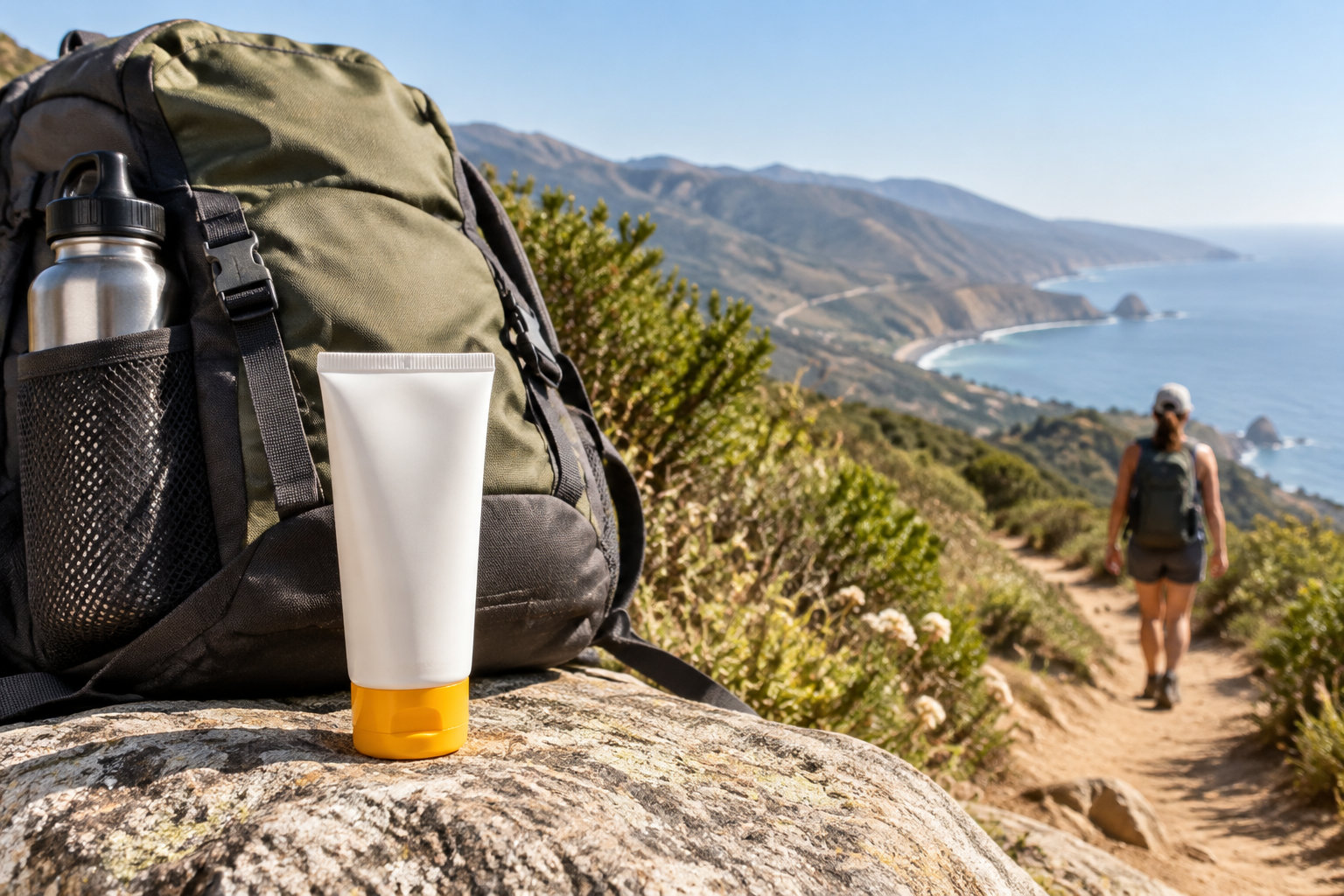
- Choose SPF 30 or higher.
- Choose broad-spectrum protection.
- Choose water resistance for exposed trails.
Skip “waterproof” and “sweatproof” wording. Check the tested water-resistance period on the label instead.
EltaMD UV Sport SPF 50: the most versatile choice for long outings
EltaMD UV Sport SPF 50 provides broad-spectrum SPF 50 protection and stays water and sweat resistant for up to 80 minutes.
The official EltaMD active-use range lists UV Sport in two sizes at $32, or about €28. A 3 fl oz format is also sold through specialist medical retailers.
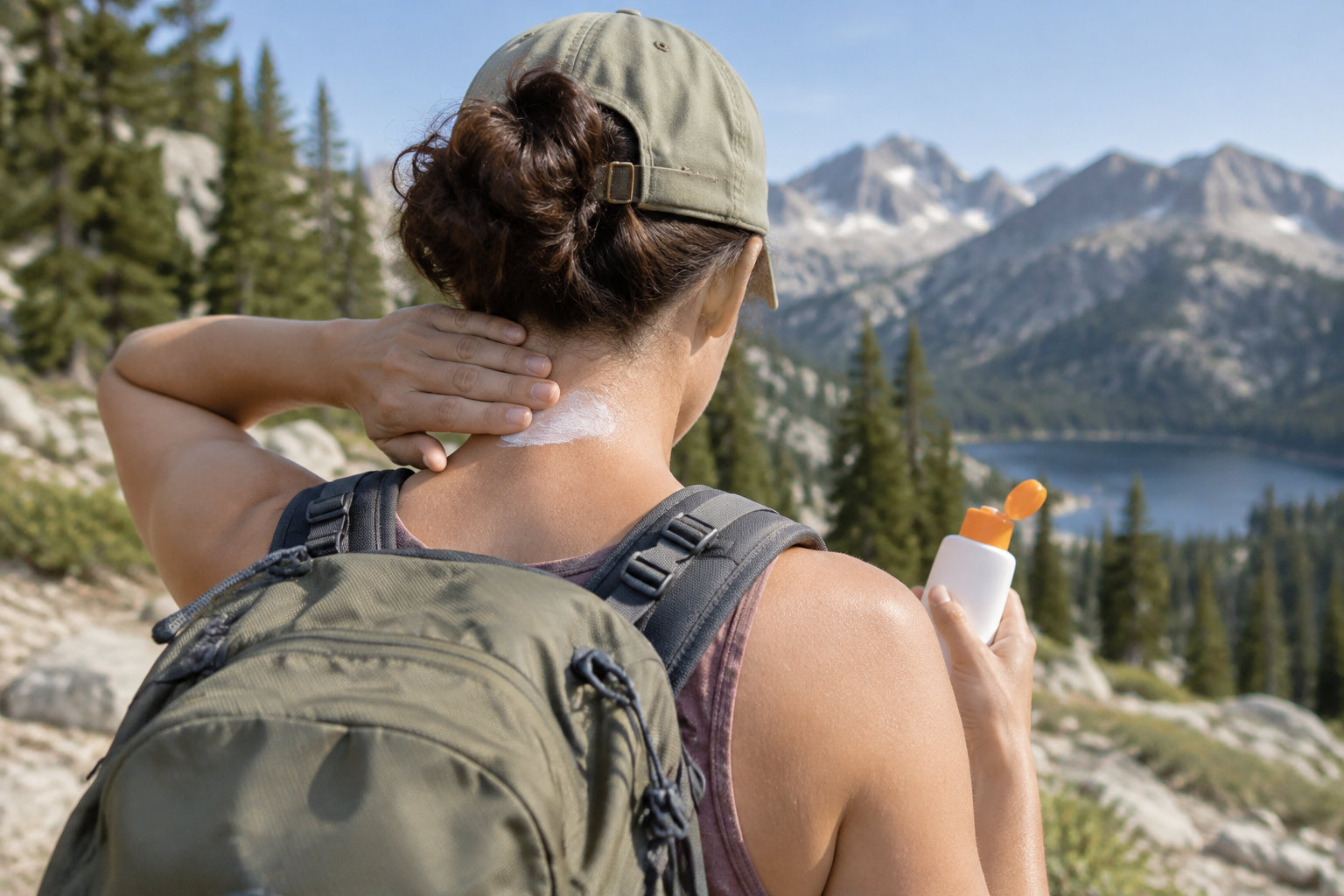
Apply a generous layer to the hairline, ears, neck, forearms, hands, and the tops of your feet. Keep it away from your eyes, and wipe sweat rather than rubbing sunscreen toward your eyelids.
Neutrogena Beach Defense SPF 70: the best large-bottle value
Neutrogena Beach Defense SPF 70 is a broad-spectrum lotion for face and body, with up to 80 minutes of water resistance. It is free of oxybenzone.
- Water resistance: up to 80 minutes
- Sizes: 1 fl oz and 6.7 fl oz
- Price: $16.99 for the 6.7 fl oz bottle, or about €15
Apply the same quantity you would with SPF 50. A higher SPF does not allow a thinner layer. Protection drops once you sweat, wipe your face, or leave skin uncovered for too long.
La Roche-Posay Anthelios UV Pro-Sport SPF 50: the sport-focused formula
La Roche-Posay Anthelios UV Pro-Sport SPF 50 gives broad-spectrum SPF 50 protection. It resists water and sweat for up to 80 minutes. The face-and-body formula is made for hiking, running, and cycling.
The product page lists a 6.76 fl oz bottle at $32.99, about €29. It is fragrance-free and non-comedogenic, and it is made for sensitive skin. Still, patch-test it before a long hike.
Water and sweat resistance lasts up to 80 minutes, so reapply once you have been sweating for that long.

It is marketed as no-drip, so it should not run into your eyes while you sweat. Still, apply it carefully around the brow. Then wipe your face with a clean cloth.
Banana Boat Ultra Sport SPF 50+: the affordable large format
The lotion comes in an 8 fl oz bottle and a 10 fl oz bonus-size bottle.
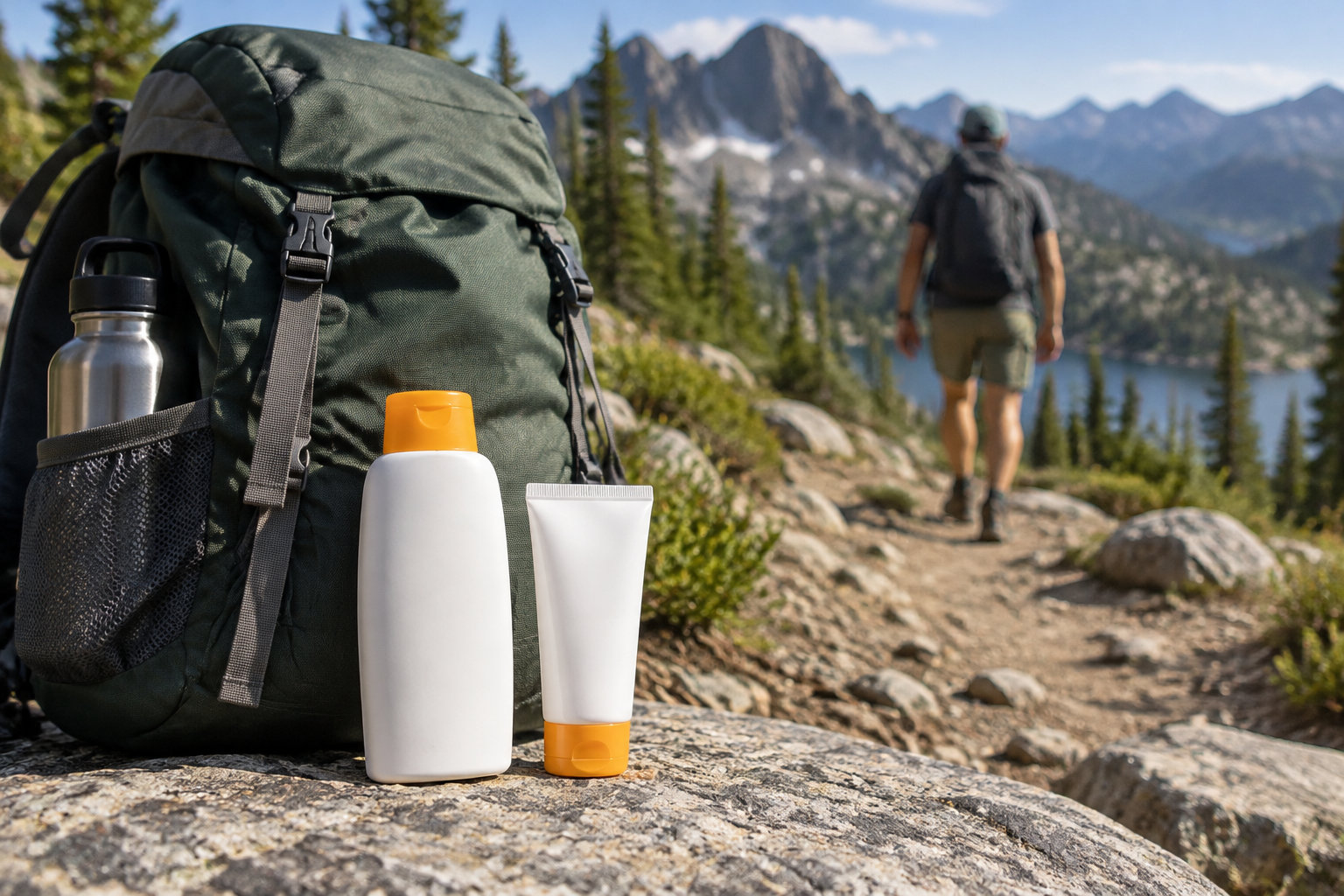
The 8 fl oz bottle usually costs about $9 to $11, or roughly €8 to €10. The 10 fl oz format usually costs about $10, bringing it to around $1 per fl oz.
Take the 10 fl oz bottle for multi-day trips or group outings. Take the 8 fl oz for a day hike where pack space counts.
Banana Boat Sport Ultra SPF 50 spray: the practical group option
The spray comes in 1.8 oz containers, 6 oz cans, 9.5 oz cans, and 12 oz twin packs.
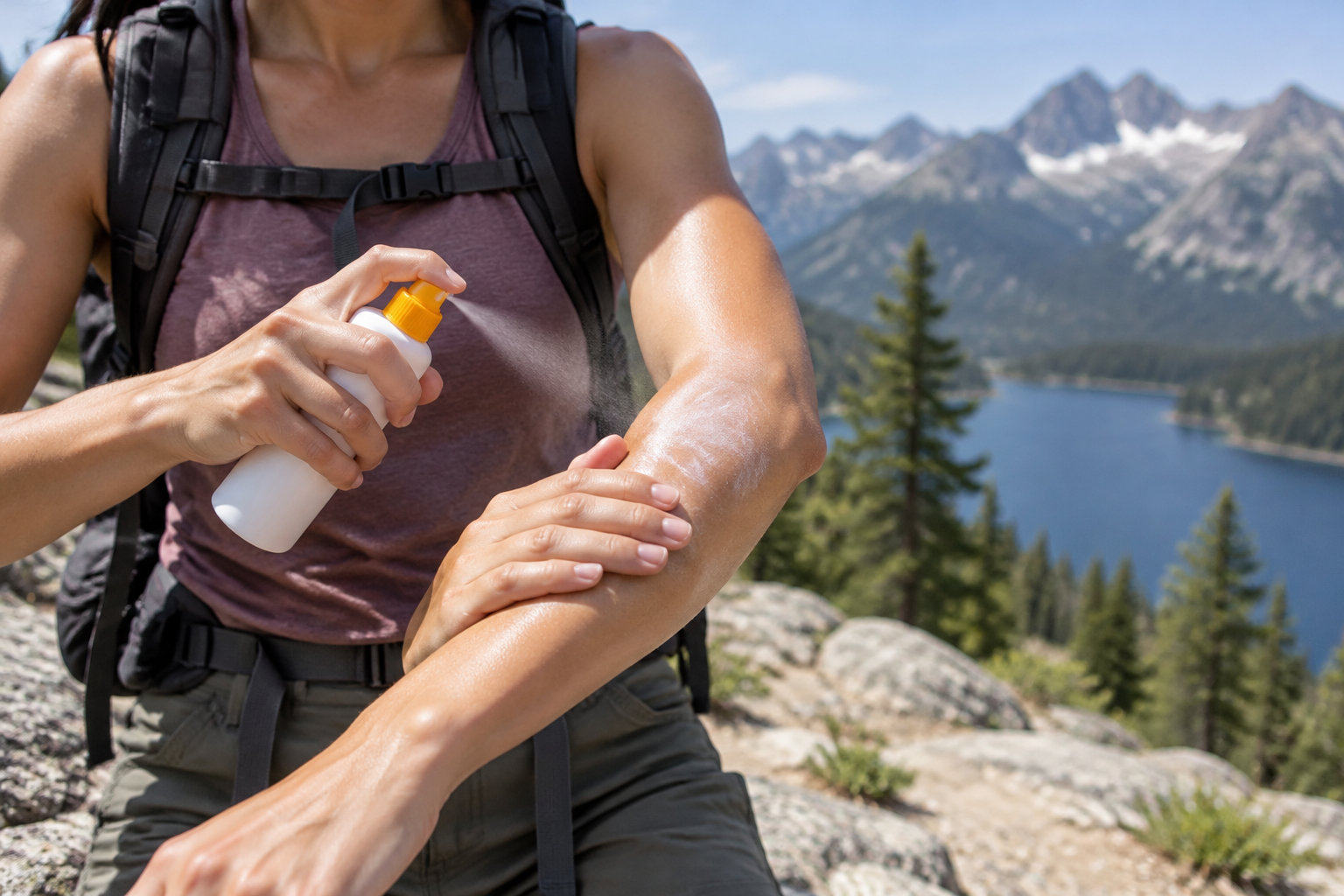
The 9.5 oz can costs about $12, or roughly €11, while 6 oz multipacks lower the cost per can.
Apply the spray in three steps:
- Hold the can close to the skin.
- Spray generously until the skin glistens.
- Rub the sunscreen across the area.
Do not spray directly onto your face or breathe the mist, and keep it away from flames. Use lotion on the face and around the eyes instead.
Applying and renewing sunscreen during a hike
Broad-spectrum protection covers both UVA and UVB radiation, while SPF mainly measures protection against UVB-driven sunburn.
A 40-minute water-resistance label means the tested SPF holds on wet skin for 40 minutes; an 80-minute label means 80 minutes. Neither period means protection lasts the rest of the day.
Apply sunscreen 15 minutes before leaving the trailhead. Use about 1 fl oz to cover an average adult’s exposed body, and at least 1 teaspoon for the face.
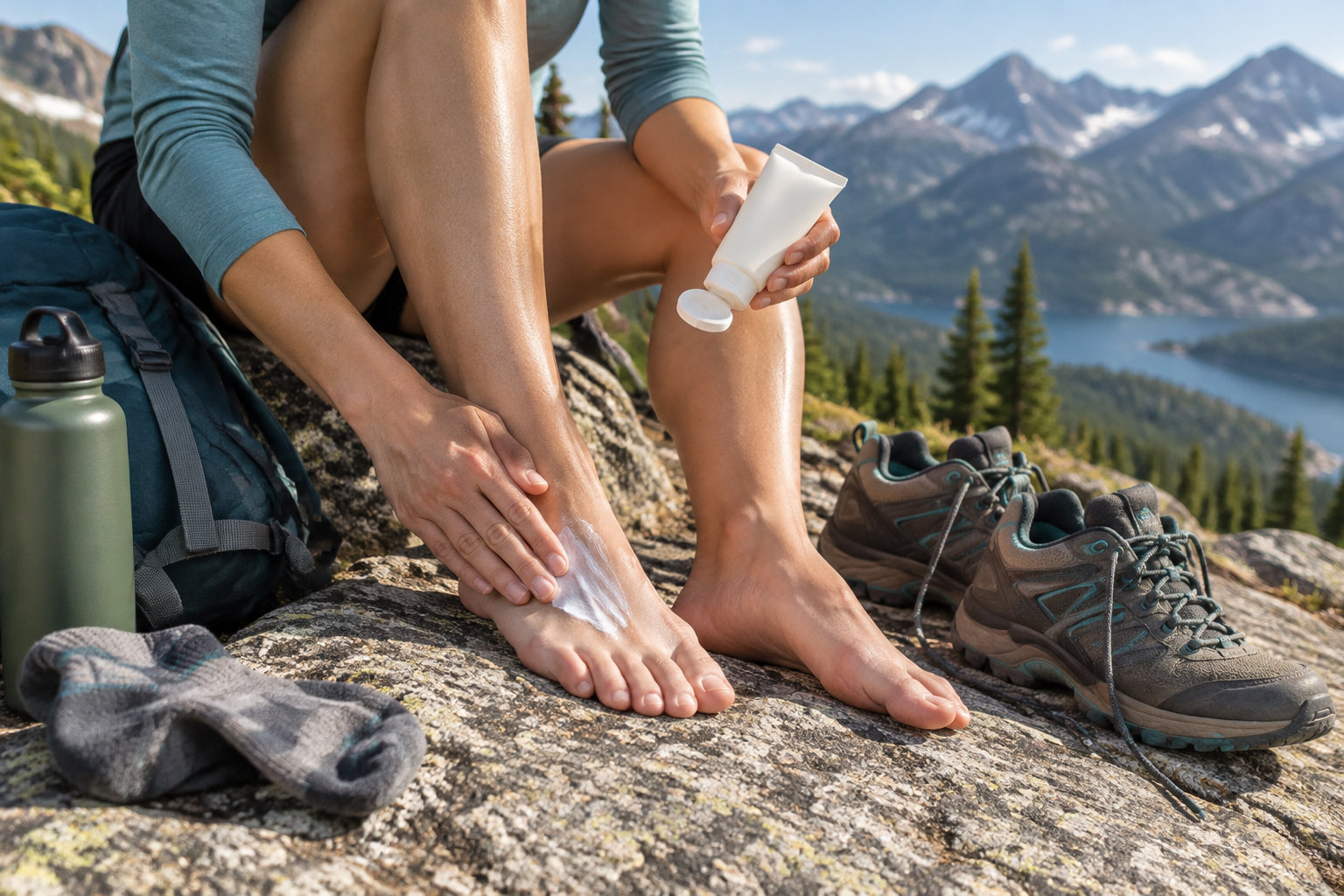
Cover your face, ears, neck, lips, scalp, shoulders, forearms, backs of hands, knees, and the tops of your feet. Use lip balm with SPF 30 or higher, and ask for help with areas you cannot reach.
Reapply every two hours during continuous exposure. Reapply sooner after heavy sweating, swimming, towel drying, or wiping your face, even when the product carries an 80-minute water-resistance claim.
UPF clothing for exposed trail sections
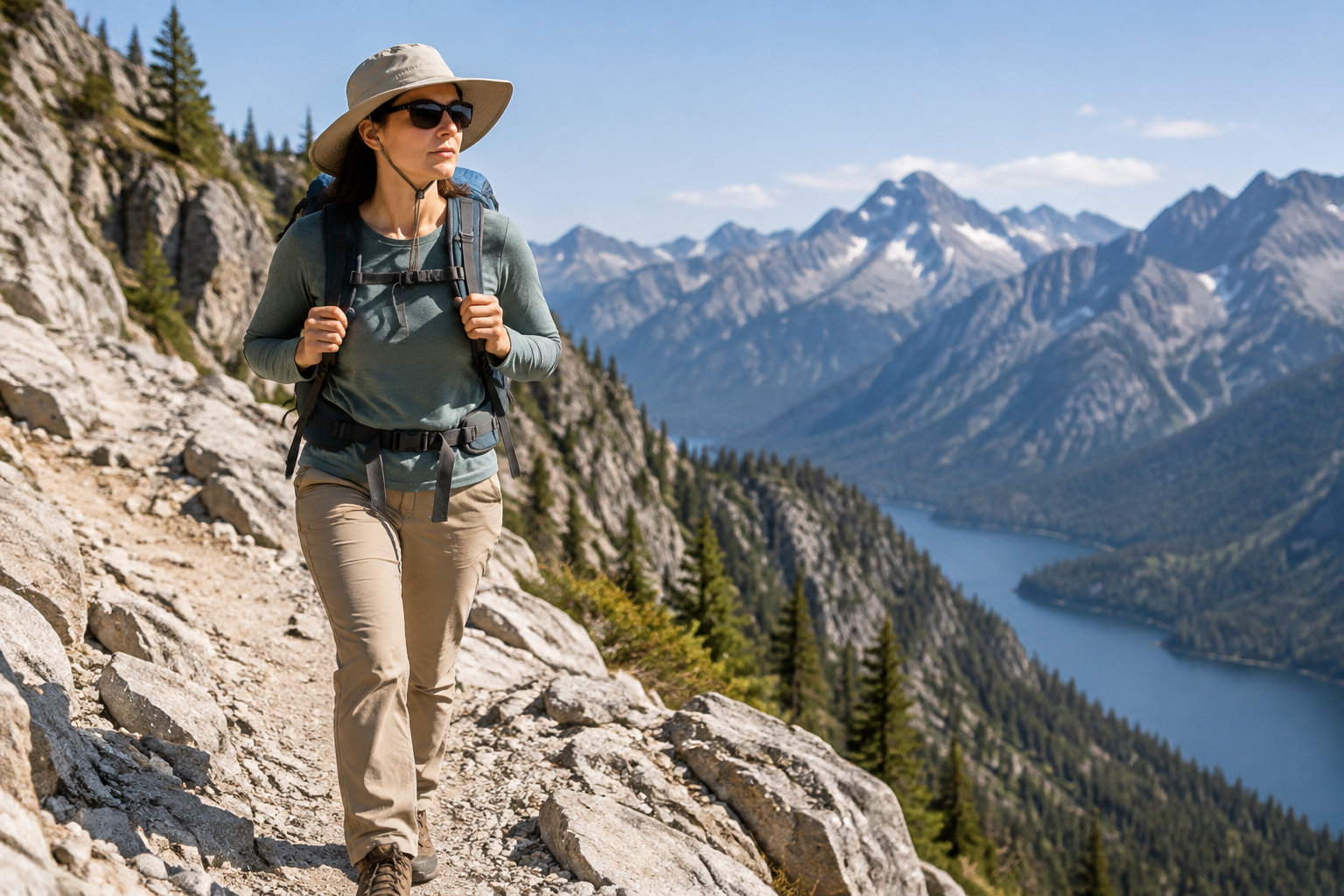
Wear a light long-sleeved shirt, a wide-brimmed hat, and UV sunglasses on exposed sections. Clothing reduces the skin that needs sunscreen; apply it to uncovered skin, including your face, hands, and neck.
Four UPF hoodies for exposed sections
-
Women’s REI Co-op Flash Shade Hoodie
Women’s REI Co-op Flash Shade Hoodie uses a lighter 110 g/m² grid fabric, wicks moisture, dries quickly, and provides UPF 50+ protection.
-
Women’s REI Co-op Sahara Shade Hoodie
Women’s REI Co-op Sahara Shade Hoodie uses a heavier 150 g/m² fabric and provides UPF 50+ protection.
-
Women’s KÜHL Sunshade Hoody
Women’s KÜHL Sunshade Hoody is a lightweight, breathable sun-protective layer. Wear it over a shirt on exposed ridges to reduce the sunscreen needed on your arms and shoulders.
-
Women’s Mountain Hardwear Crater Lake Long Sleeve Hoody
Women’s Mountain Hardwear Crater Lake Long Sleeve Hoody provides UPF 50 protection with a full-coverage hood. It is built for hiking, backpacking, and climbing.
Before your first long hike, choose one sunscreen from this list and patch-test it on a short outing. Carry the bottle in your daypack so you can reapply on the trail, not only at the trailhead.
FAQ
Which sunscreen should you stay away from?
Avoid any product without broad-spectrum protection, water resistance, or clear reapplication instructions.
Treat ‘all-day’ wording as marketing, not proof: a hot, strenuous hike cuts protection short.
Can you use sunscreen with a hiking shirt?
Yes. Apply sunscreen to all uncovered skin, then add a UPF-rated shirt, hood, hat, or sunglasses.
Clothing does not replace sunscreen on your face, hands, and neck.
Does “sport” sunscreen have a separate protection standard?
No. “Sport” does not set a separate protection standard; check the label for broad-spectrum protection, SPF, and water resistance.
Check the label for broad-spectrum protection, an SPF, and a water-resistance period of 40 or 80 minutes.