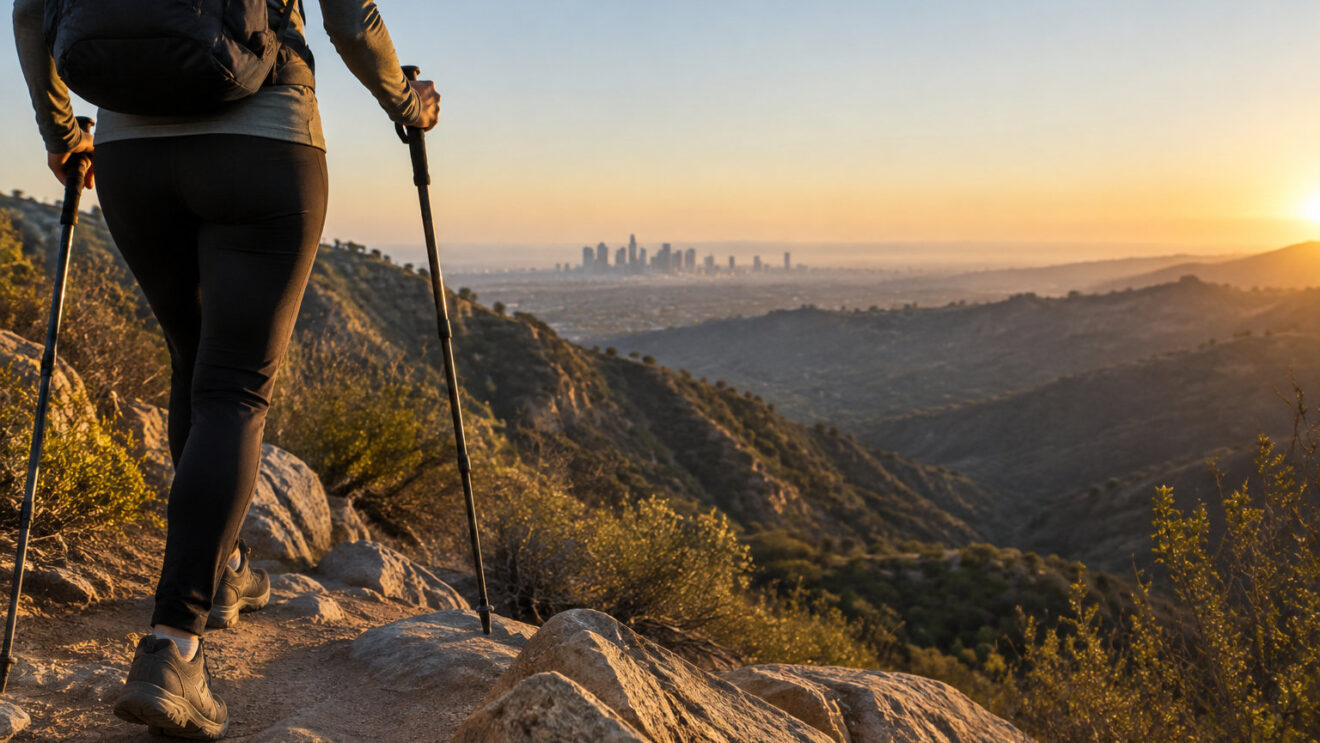
A pole set to the wrong length can lift your shoulder on a climb.
On a steep canyon trail, you change pole length often. This guide helps you choose the best trekking poles for steep trails.
Which trekking poles to choose for your terrain, budget and pack
On steep Los Angeles canyon trails, choose poles with secure locks and interchangeable tips. Check the length range: you need to shorten them for climbs and lengthen them for descents. The Black Diamond Alpine Carbon Cork is the strongest all-round choice. The MSR DynaLock Ascent Carbon packs smaller and suits technical routes.
For a day hike with a light pack, the REI Co-op Trailmade or the LEKI Legacy Lite covers the basic need at lower weight and cost. For a multi-day route, pick one of these three:
- Alpine Carbon Cork: more adjustment and grip options
- DynaLock Ascent Carbon: more adjustment and grip options
- REI Co-op Traverse: more adjustment and grip options
Checklist before you buy
- Locks that hold the length securely on a steep descent
- Interchangeable tips for dirt, rock and sand
- A length range that shortens for climbs and lengthens for descents
- Weight against the length of your pack and the distance of your route
- Price against how often you will use the poles on steep terrain
Black Diamond Alpine Carbon Cork: the premium choice for steep slopes
Key specifications
The Black Diamond Alpine Carbon Cork costs €200 in the European store. It is sold as a pair. Each pair includes:
- 100% carbon shafts
- a natural cork grip
- an EVA foam grip extension
- interchangeable tech tips
| Specification | Black Diamond Alpine Carbon Cork |
|---|---|
| Price (Europe) | €200 per pair |
| Length adjustment | 100 to 130 cm |
| Collapsed length | 61 cm |
| Weight (pair) | 486 g |
| Lock | Forged aluminium FlickLock Pro, low-profile clamp |
The poles adjust from 100 to 130 cm and collapse to 61 cm. A pair weighs 486 g, which keeps pack weight below many aluminium alternatives. The design does not fold as short as a Z-pole model.
Cork handles work better than rubber in warm weather. Cork moves moisture away from the hand. The EVA extension gives you a lower grip. Use it when you shorten the poles for a climb or cross a slope.
Lock and tension setting
-
FlickLock Pro
Set the tension with the lever open, then close the lever firmly before loading the pole. The supplied tool or a suitable screwdriver adjusts the tension, depending on the lock version.
Where it works best
The Alpine Carbon Cork suits steep ascents. Shorten the shaft and use the extended grip. Your hand stays in place. On descents, the 130 cm maximum gives taller hikers more reach. It also keeps the torso upright.
Carbon reduces vibration. It keeps the pair light. It takes sharp side impacts less well than aluminium.
Do not wedge a shaft between rocks or lean your full body weight onto a pole placed in a crack. Use the pole for balance and rhythm, not as a substitute for a handhold.
MSR DynaLock Ascent Carbon: compact support for technical terrain
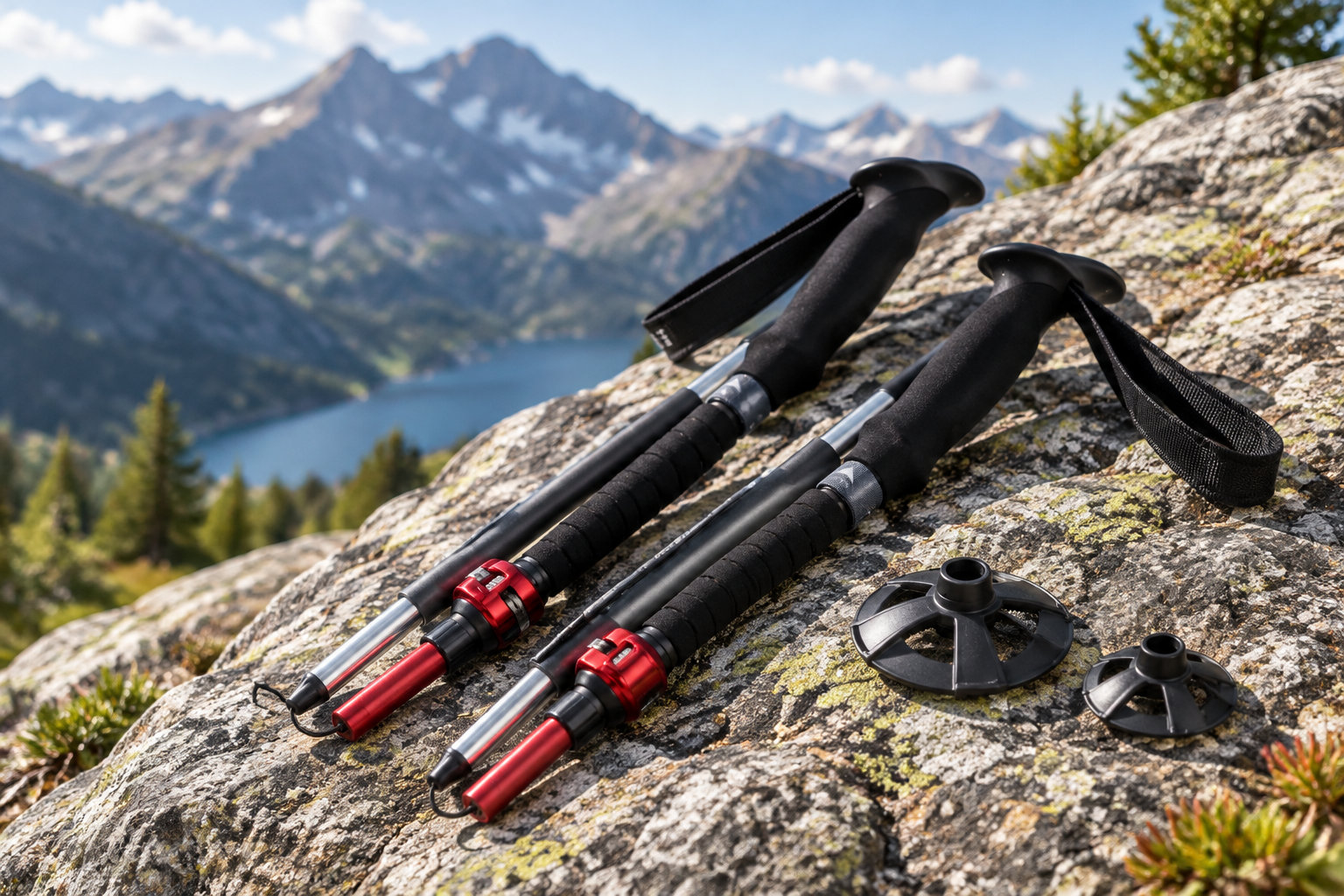
The MSR DynaLock Ascent Carbon is made from carbon fibre and packs smaller than the Black Diamond Alpine Carbon Cork. It has an EVA foam grip, a lower grip for sidehilling, and separate summer and winter baskets.
The two sizes differ as follows:
- Small: 100 to 120 cm, 470 g per pair, folds to 36.2 cm
- Large: 120 to 140 cm, 500 g per pair, folds to 44.5 cm
The two ranges meet at 120 cm and do not overlap. If your usual length is near 120 cm, choose the size that lets you shorten for climbs and lengthen for descents.
The DynaLock range covers only 20 cm. Most three-section telescopic poles adjust over a wider span. It suits a known usual length. It gives less room for large changes between a steep climb and a long descent.
The anodised aluminium lever adjusts clamp pressure without tools using the micro-tightening system. Close the lever fully and test the pole with a firm downward push before relying on it for balance. Check the clamp before each steep section, not after the pole moves under load.
Checks before you buy and before a steep section
- Confirm your usual length falls within the 100 to 120 cm or the 120 to 140 cm range.
- Leave room to shorten for climbs and lengthen for descents.
- Check that the clamp lever is tight before each steep section, not after movement under load.
REI Co-op Traverse: the versatile aluminium option
Adjustment and equipment
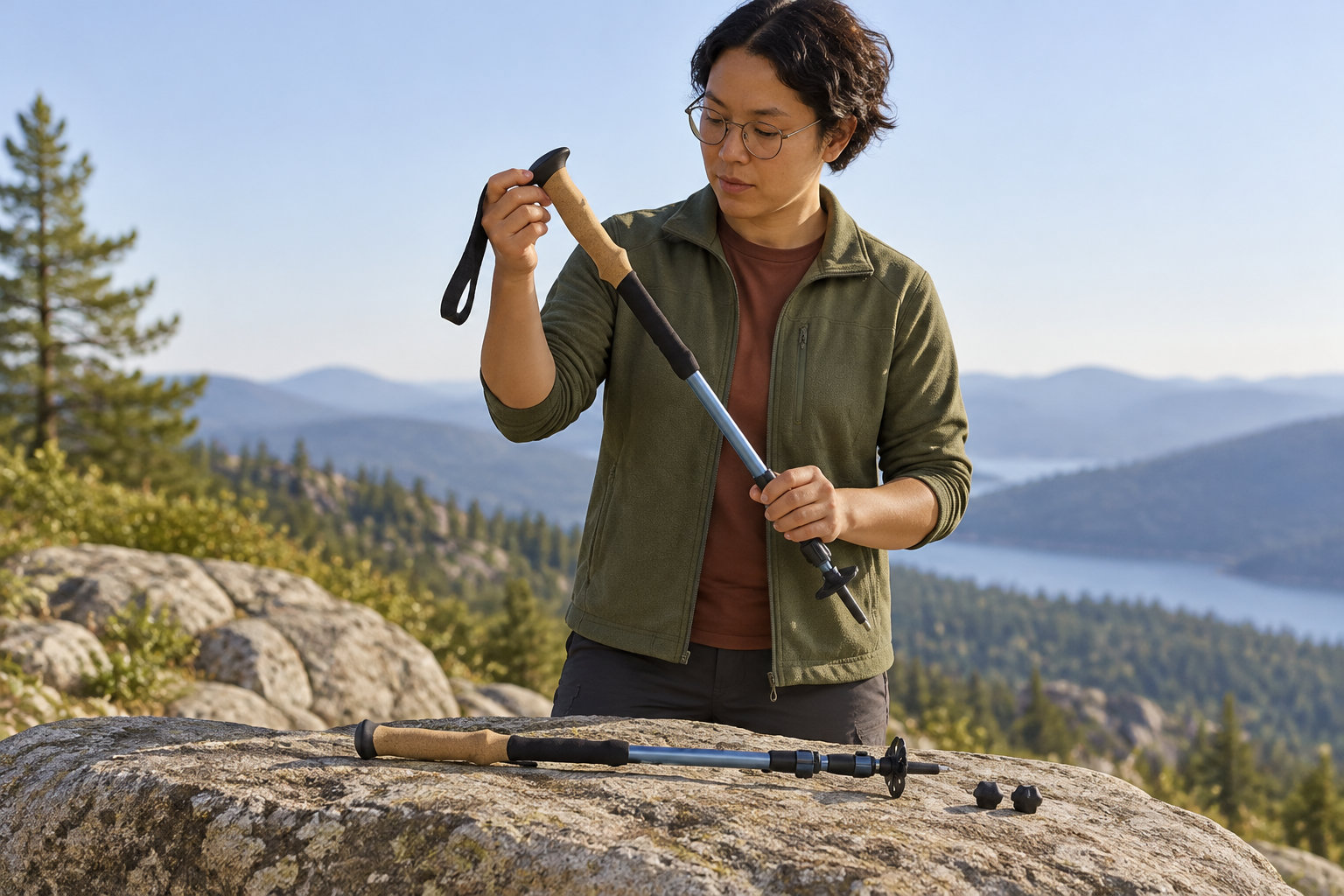
The REI Co-op Traverse has 7001 aluminium shafts, cork grips, external lever locks and padded straps. Its listed price and sales channel are US-based, so check delivery, import costs and warranty handling before buying from France.
| Version | 95 to 120 cm | 105 to 140 cm |
|---|---|---|
| Weight per pair | 510 g | 556 g |
| Folded length | 59.7 cm | 63.5 cm |
| Suited to | Users up to about 180 cm | Taller hikers |
Both versions adjust enough for normal walking, steep climbs and descents. The 140 cm maximum gives taller users more reach downhill. The 95 to 120 cm size is easier to control for shorter hikers.
The pair includes:
- Carbide tips
- Trekking baskets
- Removable rubber tips for pavement and other smooth surfaces
The baskets stop the tips sinking into soft ground. Rubber tips reduce noise and damage on hard surfaces.
Durability on rocky trails
Aluminium is heavier than carbon. It usually bends under extreme stress instead of breaking suddenly. The Traverse suits poles that may hit rock, scrape rough surfaces or take repeated impacts.
The external levers adjust without tools. The micro-tightening system lets you correct clamp pressure on the trail. Close each lever fully. Test the pole with a firm downward push before you rely on it for balance.
The Traverse suits steep ascents when you want an adjustable 7001 aluminium pole that can take repeated contact with rock and do not mind the extra weight.
The listed price and sales channel are US-based. For a buyer in France, delivery, import costs and warranty handling need checking before purchase.
REI Co-op Trailmade: the budget choice for day hikes
The REI Co-op Trailmade is sold as a pair. It has aluminium shafts, foam grips and external lever locks. Its specifications list a 510 g pair weight and adjustment from about 90 to 140 cm.
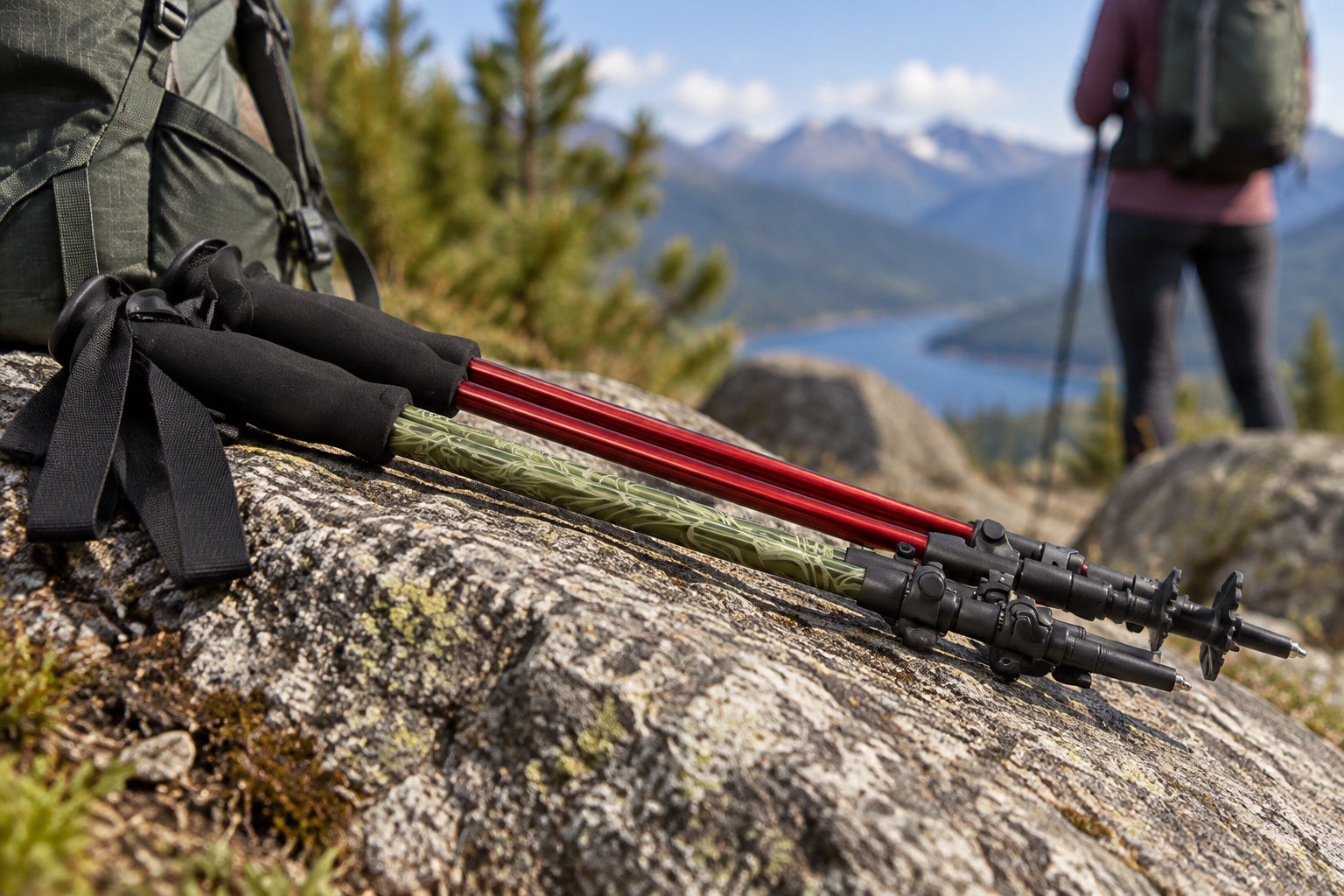
Trailmade specifications
Length
- Adjustable from 35.5 to 55 inches (about 90 to 140 cm)
Folded
- 25 inches (about 63.5 cm)
Weight
- 510 g per pair
Black Diamond Trail: aluminium strength with a lower grip
The Black Diamond Trail costs €100 in Europe and has a usable range of 100 to 140 cm. It uses:
- three aluminium sections
- dual FlickLocks
- an EVA foam grip
- a partly recycled Variwidth strap
The 7075 aluminium shaft is heavier than carbon but better suited to repeated contact with rock. Under excessive force, it is more likely to bend than to break suddenly.
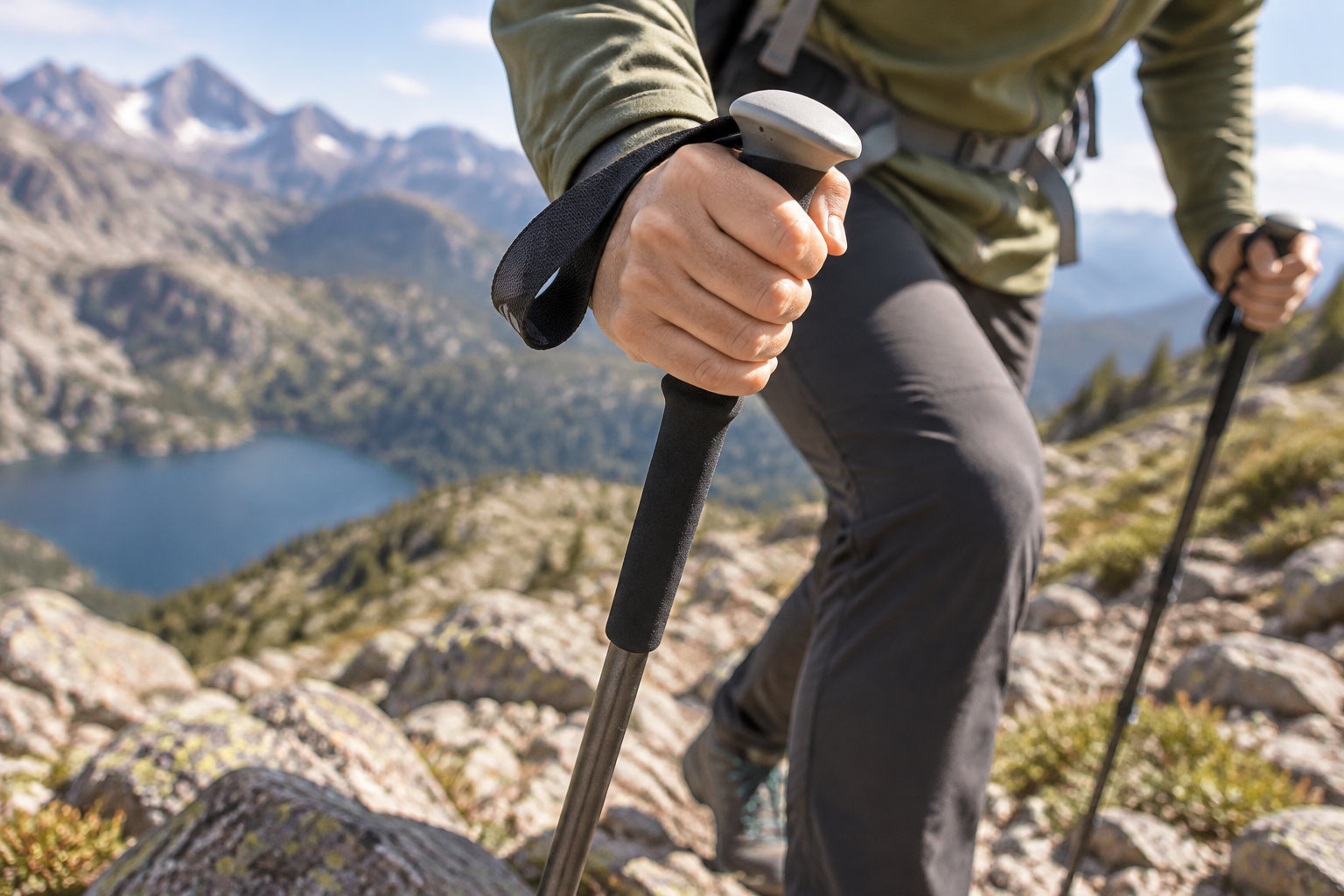
The foam grip extension gives a lower hand position on steep climbs and sidehills. You can keep the pole shorter without gripping the shaft below the handle.
The Trail takes interchangeable tips and supports trekking accessories from the Black Diamond system, subject to model compatibility. Carbide tips grip rock and firm dirt.
Black Diamond Trail Vista FLZ: the compact folding option
Format and adjustment
| Specification | 95 to 110 cm | 110 to 125 cm | 120 to 135 cm |
|---|---|---|---|
| Weight per pair | 500 g | 508 g | 534 g |
| Folded length | 37 cm | 37 cm | 40 cm |
Check that your usual length falls inside the size you buy, since each size covers a narrower range.
Use on the trail
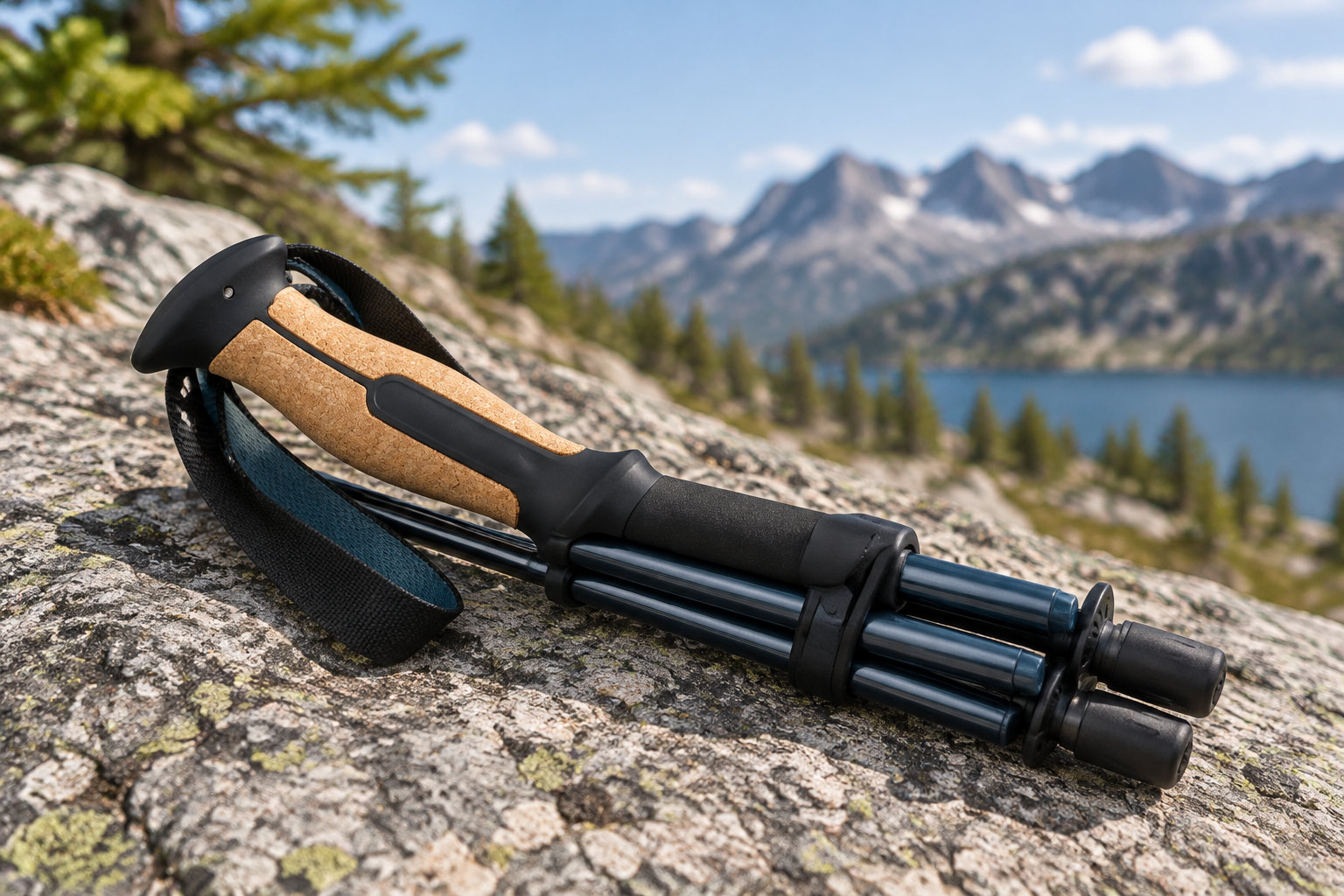
The folding structure takes more steps to reconfigure than a telescopic pair. Set the size before a steep section where possible, not partway up it. Once the sections are connected, use the FlickLock to set the final length.
Folding poles take more steps to reconfigure than a telescopic pair. Set the size before a steep section where possible, not partway up it.
This model suits hikers who carry poles only for selected parts of a route. Its compact joints and limited adjustment favour packability over maximum support under heavy loads.
Its compact joints and limited adjustment favour packability over maximum support under heavy loads.
LEKI Legacy Lite: an accessible option for moderate terrain
Specifications and intended use
The standard LEKI Legacy Lite costs €75 in Europe. It has:
- three aluminium sections
- an EVOCON grip
- Speed Lock Plus adjustment
- a carbide Flex Tip
The standard model specifications are:
- Adjustment: 100 to 135 cm
- Folded length: 66 cm
- Weight: 251 g per pole, or 502 g per pair
A compact version adjusts from 90 to 125 cm and weighs 240 g per pole.
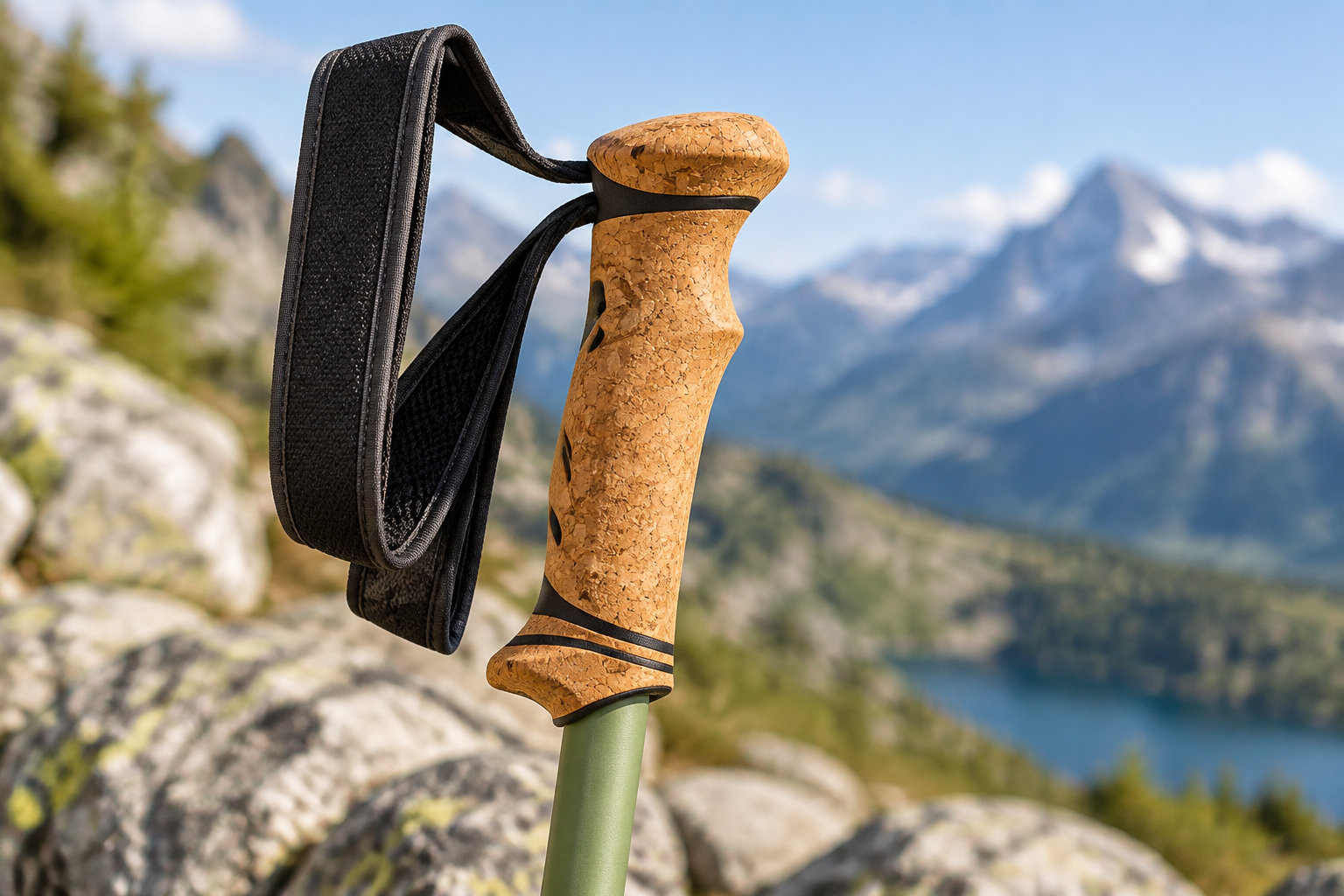
The EVOCON grip has a rounded support surface. It helps on descents. The cork-based CorTec material feels warmer than rubber. Continuous adjustment lets you set the length to match your height.
The Legacy Lite suits walkers and hikers on easy to moderate trails, including dry canyon approaches with limited scrambling. It is less suitable for routes that require a very short packed length, a lower grip for frequent steep changes, or maximum impact resistance.
Comfort and adjustment
Speed Lock Plus changes length quickly, without tools. Set both poles to the same length on regular ground. Shorten or lengthen them together when the slope changes.
The adjustable one-size strap fits different hands. Leave enough room to slide your hand in from below. Let the strap support the wrist. A strap that is too tight restricts circulation. A strap that is too loose reduces control.
How to choose the right length on a slope
Set the starting length
To set the starting length on level ground:
- Place each tip near your foot.
- Adjust the pole until your elbow bends at about 90 degrees.
- Check that the handle sits around waist or hip height, with your forearm roughly parallel to the ground.
A starting guide by height:
- Under 155 cm: 100 cm
- 155 to 170 cm: 110 cm
- 171 to 182 cm: 120 cm
- Above 183 cm: 130 cm
When your height falls between two sizes, use the manufacturer’s range.
A pole that is too long lifts the shoulder and can pull against the pack straps. A pole that is too short forces you to bend forward and reduces support on descents.
Starting length check
- Elbow bent at about 90 degrees with each tip near your foot.
- Handle at waist or hip height, forearm roughly parallel to the ground.
- Both poles at the same length on level ground.
- Shaft not extended beyond its marked stop.
Adjust the length for climbs and descents
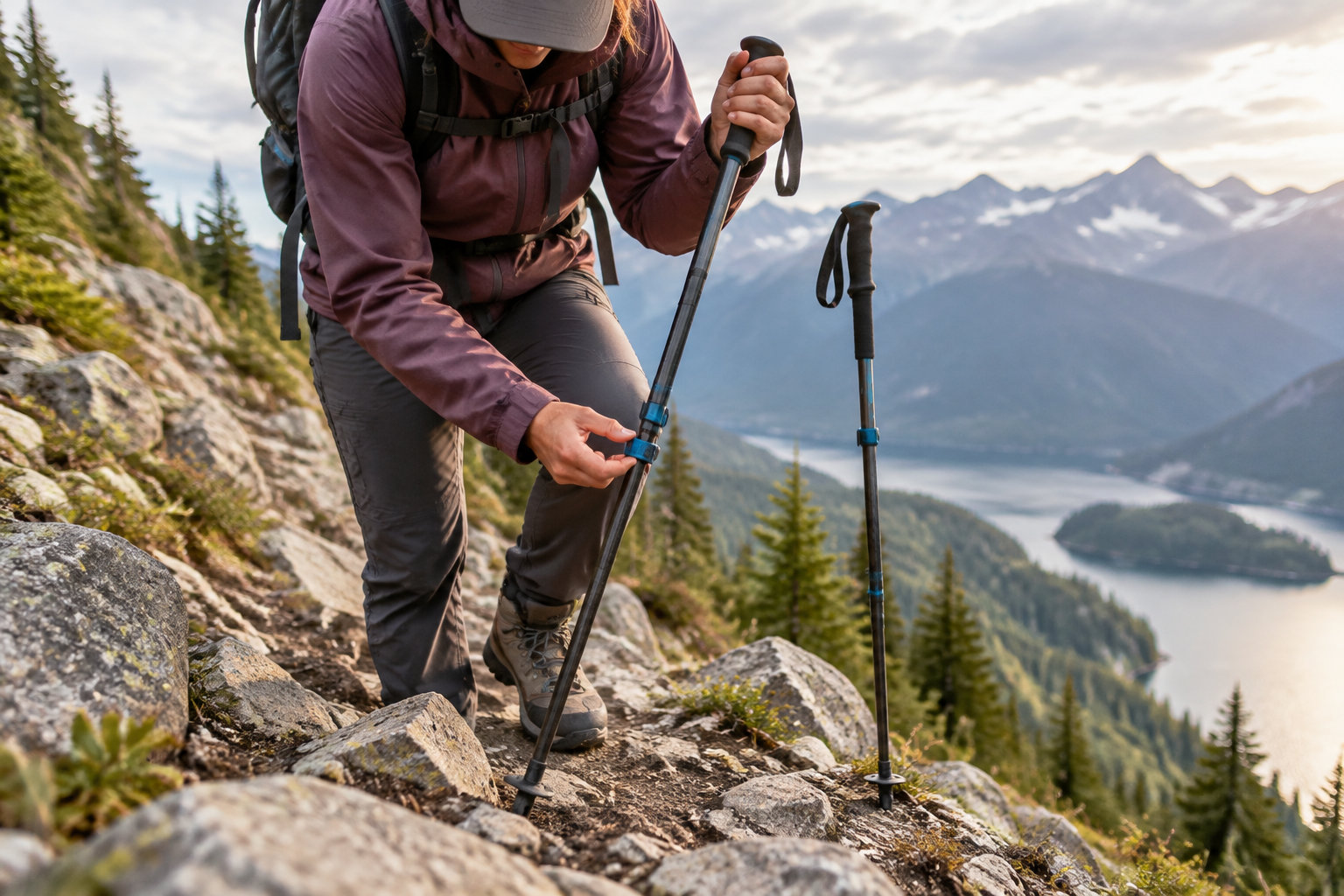
On a long uphill section, shorten both poles by about 5 to 10 cm. Shorter poles let you plant the tips closer to the body and push with the arms without raising the shoulders.
On a long descent, lengthen both poles by about 5 to 10 cm. This gives more reach and helps keep your torso upright. Place the tips farther ahead for balance.
On a sidehill, shorten the uphill pole and lengthen the downhill pole. Keep both hands near a useful working height so neither shoulder is forced higher than the other.
Use the lower grip for a temporary shorter position. On a steep descent, hold the top of the handle or the palm rest at its end for extra reach. You do not need to stop to change the lock.
Keep both poles at the same length on level ground. When changing length, adjust both poles evenly. Do not extend a shaft beyond its marked stop, because the lock may not hold it securely.
Grips, straps and materials that affect control
Grip material changes how the pole feels in your hand over a long descent:
- Cork stays comfortable in warm weather and moulds to your hand over time.
- Foam is soft and light. It suits long outings.
- Rubber insulates well in cold conditions. It can rub sweaty hands.
Telescopic poles offer the widest length range. They usually give the most direct structure on steep terrain. Folding poles pack smaller. They have more joints and less adjustment, so they suit hikers who prioritise packability.
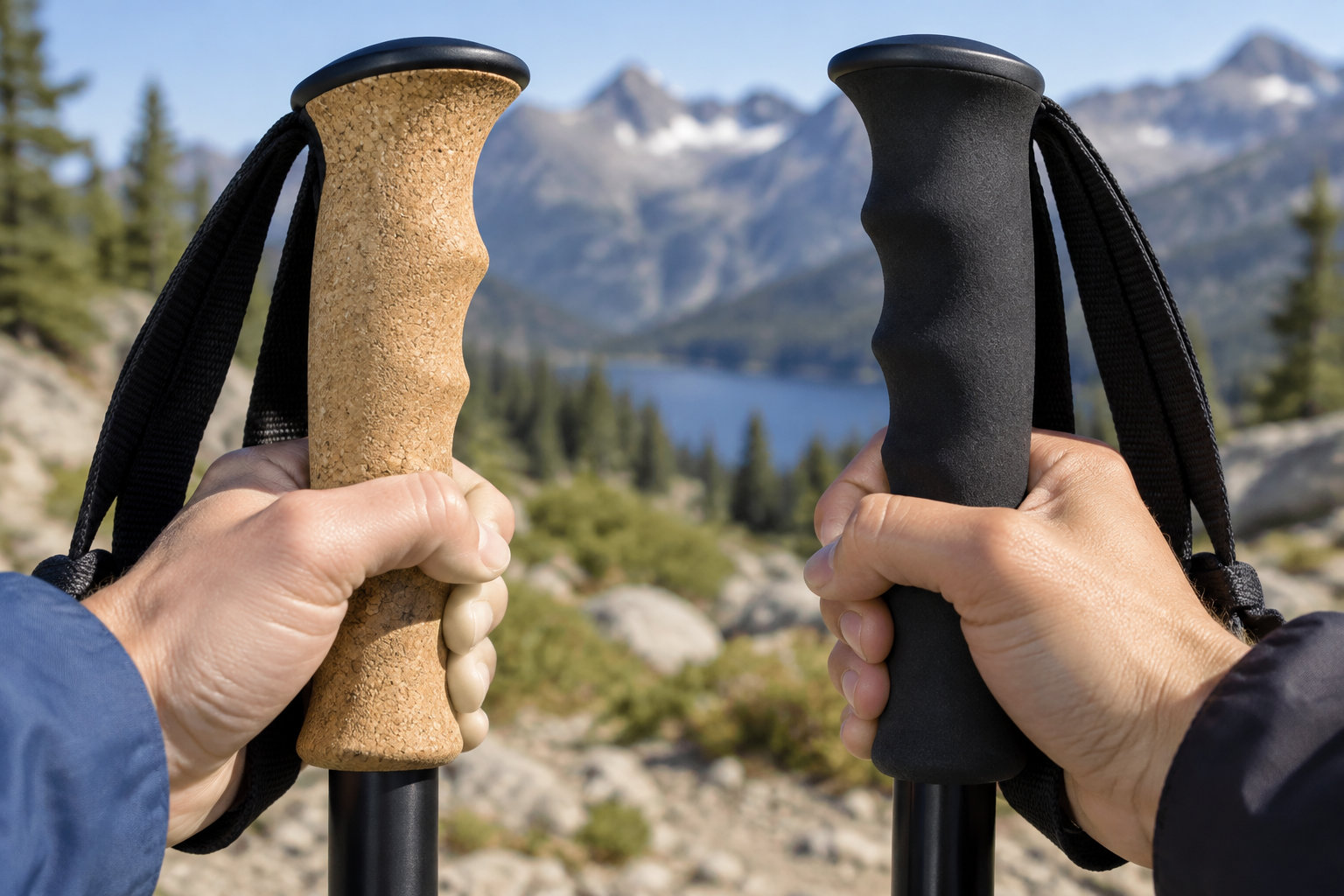
Check the strap with your gloves on
- Put on the gloves you will use on the trail.
- Slide the hand into the strap from below without forcing it.
- Release the handle and confirm the hand stays in the strap.
- Adjust the strap if the hand drops through.
Set the strap so your hand slides in without force but does not drop through when you release the handle. Check the fit with the gloves you will wear, because glove thickness changes it.
Match tips and baskets to the trail
Use the right contact surface
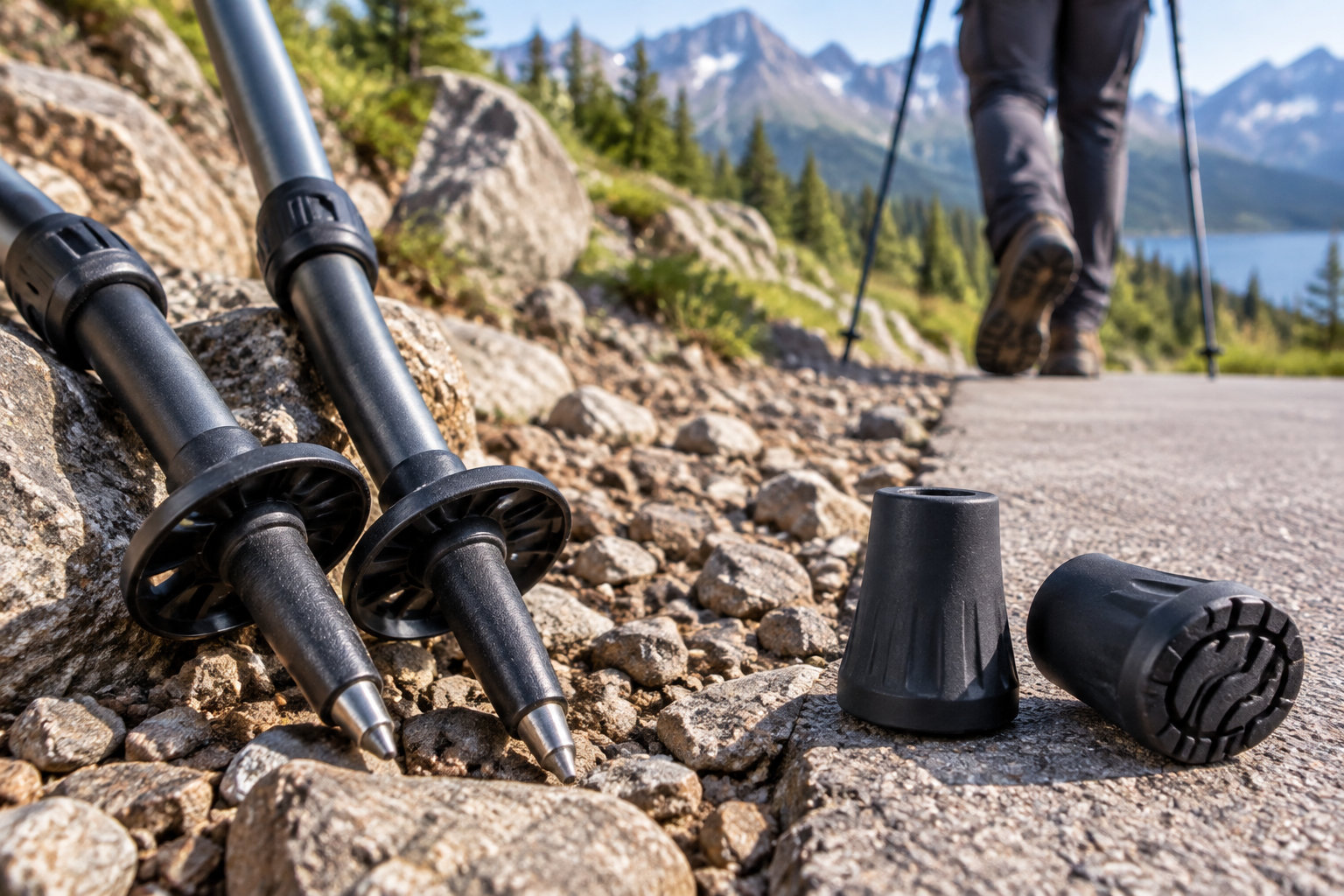
Carbide or steel tips grip firm dirt and rough rock. Rubber tips suit pavement and sensitive surfaces.
Trekking baskets stop the tip sinking into loose soil, mud and soft ground. Snow baskets are wider and add bulk. You do not need them on dry Los Angeles canyon trails.
Tip material and basket choice
Trekking or snow baskets
Trekking baskets stop the tip sinking into loose soil, mud and soft ground. Snow baskets add bulk and are unnecessary on Los Angeles dry trails.
Check what comes with each model
The Black Diamond Trail Vista FLZ includes trekking and powder baskets. The LEKI Legacy Lite uses a trekking basket with a carbide Flex Tip. Check replacement compatibility before buying another brand’s accessory.
| Basket included | Black Diamond Trail Vista FLZ | LEKI Legacy Lite |
|---|---|---|
| Tip | Not specified | Carbide Flex Tip |
| Basket | Trekking and powder baskets | Trekking basket |
The specifications cover general hiking, alpine and snow use. They do not replace a route check for loose rock, wet canyon walls or flash-flood exposure.
Stow the poles before using both hands on rock. Do not use them as anchors in unstable ground.
If you are considering a US listing, check the final price first. Delivery, import costs and warranty handling can change the total for a buyer in France. Compare it with the European store prices, such as €200 for the Alpine Carbon Cork, before you decide.
Frequently asked questions
Is there a difference between hiking poles and trekking poles?
The terms are sometimes used for the same equipment, but a hiking staff is normally one pole, while trekking poles are used as a pair.
A hiking staff is normally a single pole, while trekking poles are used as a pair, giving you two contact points.
Do expensive trekking poles make a difference?
Higher prices usually buy lower weight, better grip materials, stronger locks or a more compact fold.
Higher prices can buy lower weight, better grip materials, stronger locks or a more compact fold. They do not replace checking the length, testing the locks and placing each tip on stable ground.
What should older hikers look for in trekking poles?
Choose poles that adjust easily, have secure locks, comfortable grips and enough length for downhill sections.
The right model depends on grip preference, pack weight and what is available locally, so test the grip and lock before buying.
Should you get one or two hiking poles?
Two poles give more balanced support on steep climbs, descents and uneven ground.
Choose poles that adjust easily, have secure locks and comfortable grips, and provide enough length for downhill sections. Two poles give more balanced support on steep climbs, descents and uneven ground.