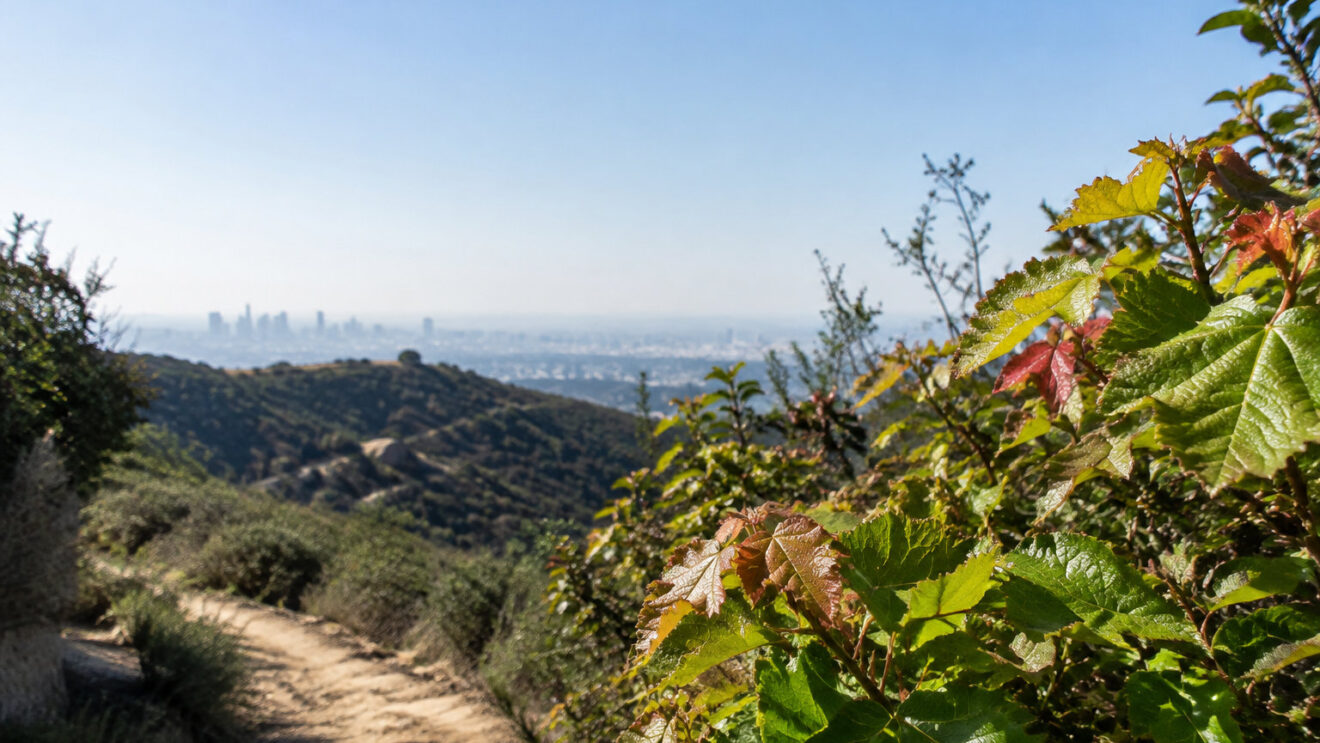
Poison oak identification for hikers is harder than it looks on Los Angeles trails. It grows as a shrub, a groundcover, or a bare vine, so it is easy to brush past.
Here is what to look for, and what to do after contact.
Poison oak identification for hikers on Los Angeles trails
Where poison oak grows locally
Pacific poison oak, Toxicodendron diversilobum, grows across Los Angeles County. You will find it in oak woodland, chaparral, coastal scrub, grassland, and riparian areas. On local trails, focus on the shady and damp spots. Stream corridors, canyon bottoms, and thick edges hold the most plants.
In full sun, the plant forms a dense shrub or low thicket. In shade, it often climbs as a vine up trees, shrubs, or fences. It also spreads along the ground. A low patch is just as risky as a tall bush.
Leaf shape is the most reliable field clue
Look for one compound leaf split into three leaflets. The middle leaflet sits on a longer stalk than the two side leaflets. The leaflets attach to woody stems that are usually free of thorns.
Leaflet edges vary. They may look smooth, wavy, toothed, or softly lobed. Tips can be rounded or pointed. The upper surface is often slightly glossy, and the underside may have fine, short hairs.
Gloss alone will not identify the plant. Shine changes with light, age, and moisture. Treat it as one clue among several.
Poison oak can appear as a shrub several feet tall, a groundcover, or a long woody vine climbing into a tree. Its twigs range from gray to reddish brown and may be bare or lightly hairy.
How the leaves change through the year
The color shifts with the seasons:
- February and March: new foliage usually appears, and young leaves may look shiny and red.
- Spring and summer: the leaves turn green.
- Late summer and autumn: foliage takes on yellow, orange, bronze, or scarlet tones before it drops.
In winter, you may find only bare sticks, reddish brown branches, or leafless vines. Treat them as poison oak if their location and structure match what you saw earlier in the year. The oil stays active after the leaves fall.
Three leaflets do not automatically mean poison oak
Telling it apart from blackberry
Wild blackberry is the most common lookalike in Los Angeles, since it can also show three leaflets. The stem gives the quickest answer:
- Blackberry: stems are armed with prickles, and the leaves or stems may feel hairy.
- Poison oak: stems are smooth and unarmed, although leaf surfaces still vary in shine and hairiness.
Pacific poison ivy and other lookalikes
Pacific poison ivy and Pacific poison oak differ in range and leaf shape:
| Feature | Pacific poison ivy | Pacific poison oak |
|---|---|---|
| Typical range | More associated with inland areas | The usual Toxicodendron species along California’s coastal and southern trails |
| Leaflet shape | More pointed, less distinctly lobed | Rounded, irregular lobes |
Shine, hairs, leaf color, and stem texture all shift with age, season, shade, and moisture, so no single feature settles the question.
If you cannot identify a plant with confidence, stay on the marked trail, keep your hands and clothing away from it, and choose another spot to stop or photograph it.
Trail habits that keep the oil off your skin
Limiting direct contact
Stay on marked trails. Avoid brushing past overgrown edges, low branches, and vegetation beside creek beds. Give vines and dense shrubs a wide berth.

Keep your pack straps and trekking poles off the plants.
Before you step off the trail
- Stay on the marked path, not the edge of the brush beside it.
- Keep your pack straps and trekking poles off the plants.
- Skip the fallen branches and woody stems, even when they look dead.
Stopping the oil from spreading
The oil can transfer to:
- Trousers and socks.
- Shoes and backpack straps.
- Trekking poles, camera equipment, and vehicle surfaces.
Handle anything that may be contaminated with gloves. Wash it in warm, soapy water before reuse.
Take off exposed clothing without rubbing it on your skin. Wash it separately with detergent. Clean shoes and gear with soap and water.
Dirt and smell tell you nothing. Clean items are not always safe.
Do not burn poison oak or toss it into a campfire. The smoke can carry the irritating oil into the air, and inhaling it can cause serious respiratory problems.
Washing quickly after exposure makes a real difference
First steps after contact

Clean suspected exposed skin in three steps:
- Wash as soon as possible, ideally within minutes and no later than about 30 minutes. Use cool or lukewarm water and soap, covering all exposed areas and the spaces under your fingernails.
- Use liquid dish soap or another soap that cuts oil, then rinse thoroughly.
- Keep the oil away from your face and other body areas, and avoid scrubbing so hard that you damage the skin.
Recognizing and easing the rash
Itching may start within hours or take several days to appear. The rash can turn red and swollen. It often forms blisters in streaks or patches where the plant brushed the skin.
For a mild rash, use cool compresses, calamine lotion, or over-the-counter hydrocortisone cream. Follow the package directions. Leave blisters intact and resist scratching. Keep the area clean to lower the risk of infection.
When to see a doctor
See a doctor for:
- Severe blistering or major swelling.
- Intense or worsening itching.
- Signs of infection, such as pus or increasing pain.
- A rash covering a large area.
- A rash involving the face, eyes, mouth, or genitals.
Call emergency services for difficulty breathing or swallowing, facial swelling, or an eye that swells shut. Smoke exposure from burning poison oak also needs prompt medical attention, especially if breathing symptoms develop.
Keep a mental record of the trails you use most, rather than treating each plant as a one-off. Note the shady creek bottoms and thickened edges where poison oak grows, and check those spots again each season. A bare vine on a familiar stretch in winter deserves the same caution as one in full leaf.
Frequently asked questions
Is Pacific poison oak the same as western poison oak?
Yes. Both names refer to Toxicodendron diversilobum, the poison oak species found in California and across the western United States.
When a trail sign or guide uses either name, it describes the same plant you are learning to spot here.
How long can poison oak oil remain on hiking gear?
The oil can stay on clothing, shoes, tools, and backpacks for a long time, until proper washing removes it.
Wash those items with soap and water before you touch them with bare skin again.
Can dogs carry poison oak oil without getting a rash?
Yes. Many dogs show no visible reaction, but their fur can carry the oil to your hands, clothing, or home.
Wear gloves when handling a dog after suspected contact, then wash the dog with pet shampoo and water.
Does poison oak grow in winter?
The oil stays active after the leaves fall.
Winter identification is harder, so avoid leafless woody growth wherever poison oak commonly grows.