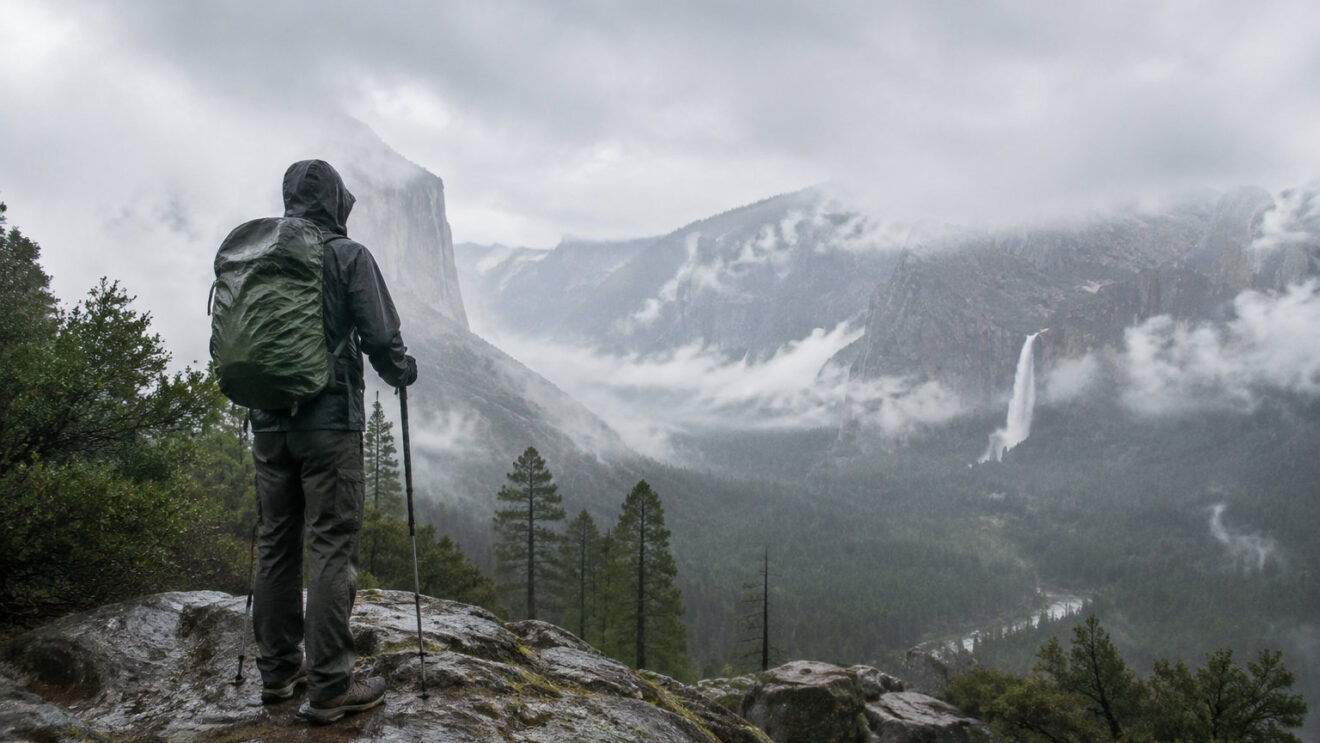
Rain can turn a mild California trail into a cold, slow walk.
Wet clothes and boots make a hike harder and less safe. Good rain gear for hiking in the rain keeps you dry, warm, and in control. Here is what to carry.
Hiking in the rain gear that balances waterproofing and breathability
Choose a shell for sustained California rain
Water resistance handles light showers for a short time. For steady rain, choose a waterproof and breathable shell with sealed seams.
Check the hydrostatic rating. It measures how much water pressure the fabric resists. A rating of about 2,100 mm meets one common rainproof standard. Brands use different tests, so compare only ratings that name their standard.
Three shell constructions trade weight and cost against durability:
- 2-layer: a membrane and outer fabric with a hanging liner. Quiet and suited to light hiking.
- 2.5-layer: a thin protective print instead of a full liner. Lighter and cheaper. It usually breathes less and resists abrasion less well.
- 3-layer: outer fabric, membrane, and inner backer bonded together. It costs more, but it handles sustained rain, pack straps, and rough trails better.
Choose a jacket that fits over your base layer and insulation. The hood must turn with your head. Use pit zips and the front zipper to release heat on climbs. Keep pockets closed. Zippers still let water in during long downpours.
Shell check before you buy
- Check the hydrostatic rating on the product page and compare it only with brands that state their test standard.
- Confirm the seams are sealed before you buy.
- Try the jacket on over your base layer and insulation.
- Turn your head in the hood to confirm it moves with you.
- Open the pit zips and the front zipper to confirm they release heat easily.
Build layers for changing temperatures
Leave cotton shirts, jeans, and socks at home. Wet cotton holds sweat and rain against your skin and loses warmth. It can contribute to hypothermia. Wear nylon, polyester, or wool instead.
Rain pants suit steady rain, wet brush, and wind on your legs. Choose full side zips if you need to pull them over boots.
Add a broad-brimmed hat when rain reaches your face or glasses.
Maintain the shell before the trail
Put the shell on before your shirt and pack get wet. Drying out on the trail takes more effort.
To test the durable water repellent (DWR), sprinkle water on the outer fabric. Drops should bead and roll off. If the fabric darkens and absorbs water, wash the shell as its care label says and renew the DWR.
Keep clothing and essential hiking gear dry
Protect the backpack from direct rain
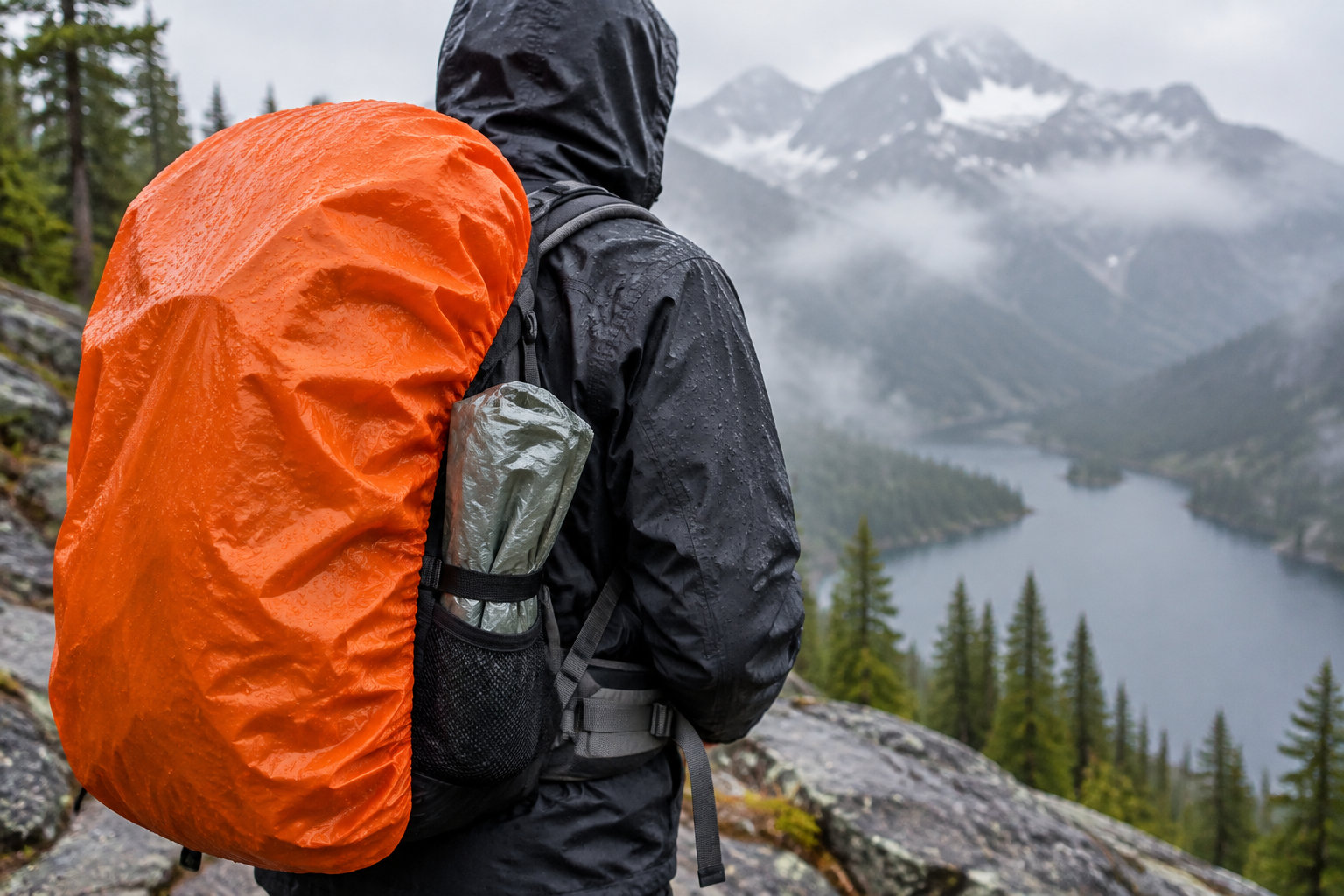
A pack cover stops rain from above. It does not stop wind-driven rain on the back panel, shoulder straps, or pack opening. Add a pack liner inside the main compartment.
A heavy-duty plastic compactor bag works as a light liner if you twist and fold the opening tightly.
Keep these items dry inside sealed protection:
- Sleeping bags
- Spare clothing
- Insulation
- Electronics
A pack cover alone is not enough for a backpacking trip.
Pack dry essentials for three wet days
Plan at least half a liter of water per hiking hour. Adjust for heat, elevation, and route length.
Carry food you can eat while walking. Regular calories help you stay warm and alert. Eat even when rain tempts you to skip breaks.
Footwear, trail hazards, and storm decisions in California
Match footwear to the wet trail
Choose waterproof boots for cold rain and shallow mud. They keep feet drier at first. They dry slowly after a creek crossing. For warm weather, repeated crossings, or wet routes, choose quick-drying mesh footwear.
Use deep lugs for mud and wet rock. Add waterproof gaiters when rain runs down your pants or over the boot collar. Pack three pairs of socks. Wet feet blister easily. Stop early, dry your feet, and cover hot spots with blister tape.
Treat creeks and flash floods as hard limits
Before crossing any creek, follow these steps:
- Check current trail conditions, especially after heavy rain.
- Do not cross flowing water above your ankles.
- Wait for every member of your group.
- Unfasten your hip belt and chest strap so you can drop the pack if you fall.
- Keep essential items in waterproof bags on your body.
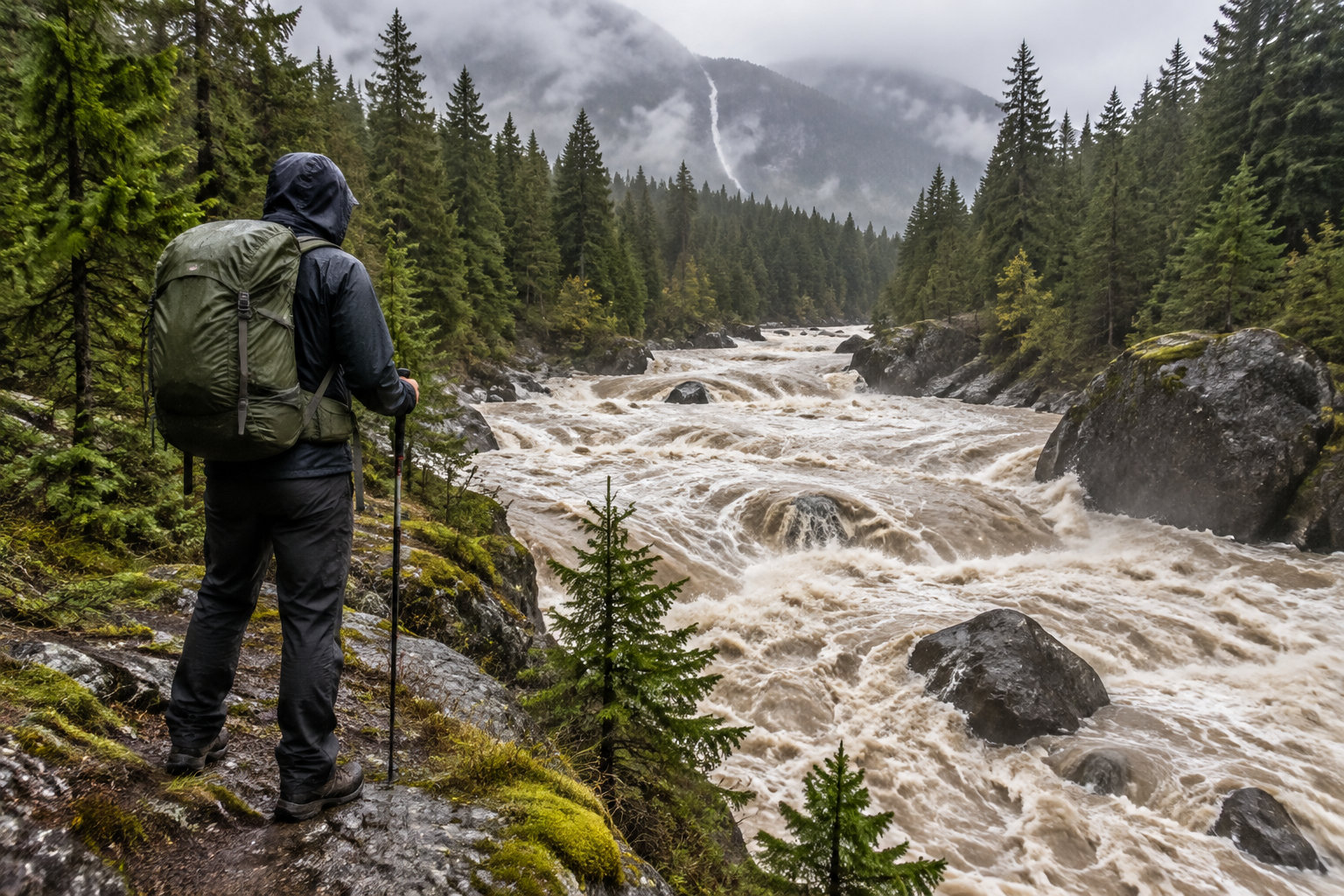
Turn around when water rises, moves fast, carries debris, or looks impossible to assess. Move to higher ground at the first sign of rising water.
Never enter floodwater on foot. Rain upstream can raise a creek under a clear sky.
Make early decisions about cold and storms
Eat and drink regularly in cold rain.
Uncontrolled shivering is a warning sign. So are confusion, unusual sleepiness, stumbling, memory problems, and slurred speech. These can signal hypothermia. Stop. Add dry insulation and change into dry clothing. Use an emergency shelter. Seek help if symptoms continue.
Check the forecast for your exact trail elevation, not only the nearest town. Look at thunderstorm timing, freezing levels, wind, snow, and flash-flood warnings.
In the Sierra Nevada, storms often build by afternoon. Set a turnaround time. Get below exposed ridges before they develop.
Move off peaks, ridges, open slopes, and exposed viewpoints when you hear thunder. A substantial building or hard-topped vehicle is the safest shelter. Wait 30 minutes after the last thunder before going back outside.
Without a safe shelter, move to lower ground. Stay away from isolated trees, rock ledges, fences, water, and metal objects. Crouch low only as a last resort.
Carry a backup kit for remote routes. Pack extra food, water treatment, a headlamp, spare batteries, and an emergency bivy or space blanket. Add a map, a compass, a charged phone with a power bank, first aid supplies, and dry insulation.
Tell someone your route and expected return time. Leave the trail when weather, water, or visibility exceeds your equipment and experience.
Before each wet hike, decide how your route handles creek crossings, then choose footwear for that route. Choose waterproof boots for cold rain and shallow mud. Choose quick-drying mesh footwear for warm weather, repeated crossings, or wet routes. Pack for the route you will actually walk.
Frequently asked questions
What is the best lightweight rain suit for hiking?
Choose a waterproof two-piece rain suit with sealed seams, an adjustable hood, cuffs, and pants that fit over your footwear.
The Frogg Toggs Ultra-Lite2 Rain Suit weighs 12.8 ounces and includes a jacket, pants, and stuff sack. Its light fabric suits open trails and emergency packing, but sharp brush can damage it.
Is Frogg Toggs actually waterproof?
Yes. The Frogg Toggs Ultra-Lite2 Rain Suit weighs 12.8 ounces and uses waterproof, wind-resistant nonwoven fabric. Its light fabric suits open trails and emergency packing, but sharp brush can damage it.
The fabric is not built for heavy abrasion, so check it before using it on brushy trails.
What are the three layers for hiking?
The three layers are a moisture-wicking base, an insulating middle layer, and a waterproof outer shell.
Add or remove the middle layer as effort and temperature change. Keep the shell within reach before rain starts.
What should you pack for a three-day rainy hike?
Pack three pairs of socks, a base-layer change, a mid layer, an insulated layer, rain pants, and a waterproof shell.
Pack extra food, water treatment, a headlamp, spare batteries, and an emergency bivy or space blanket. Add a map, a compass, a charged phone with a power bank, first aid supplies, and dry insulation.