A blister halfway up a climb can end your day. Yet a hiking first aid kit list rarely says what to pack for your route.
Here, we build your kit item by item, for a day hike or a longer trip.
Hiking first aid kit list: essential supplies for French trails
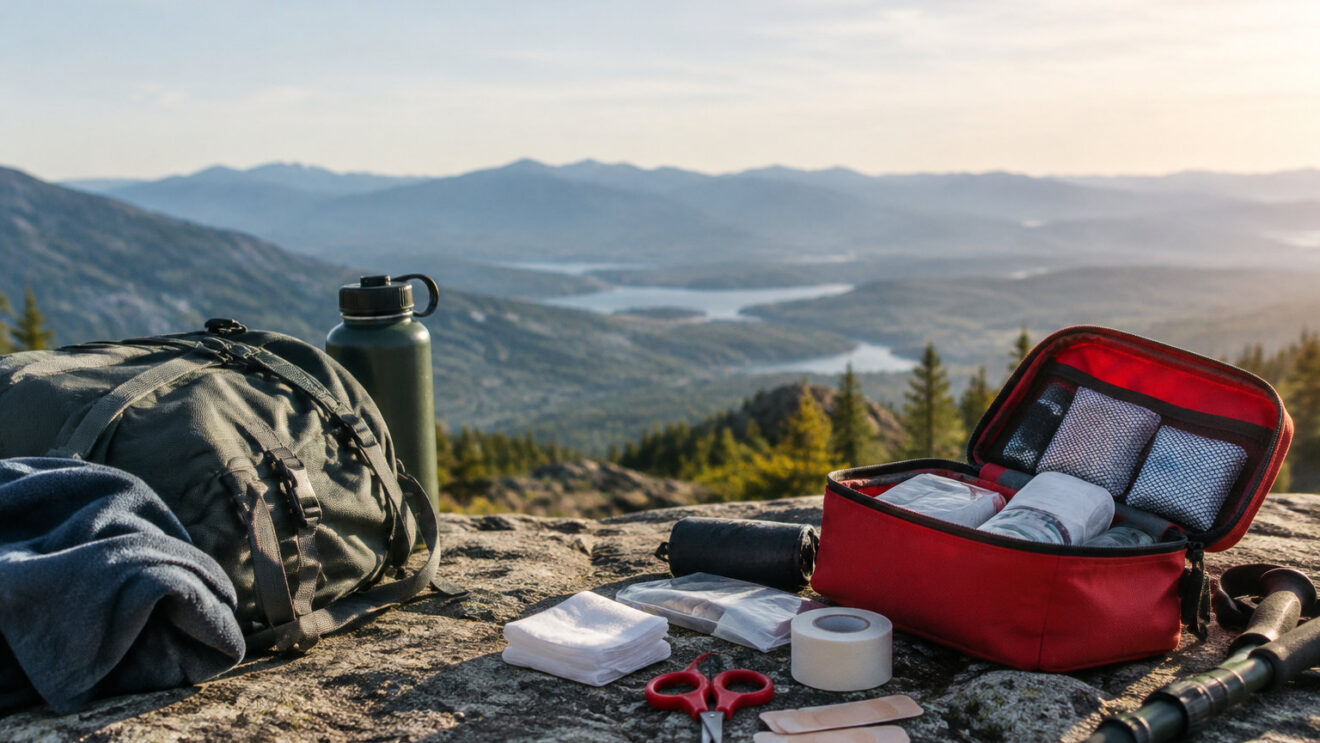
A day-hike kit for one person should handle small cuts, blisters, insect bites, minor sprains and bleeding. It also gives you basic protection until help arrives. Keep it in a bright, compact pouch. You should be able to reach it without unpacking your backpack.
Wound care items that cover most trail injuries
For a one-day outing alone, start with this:
- Adhesive plasters: 5 to 8 assorted sizes for cuts, grazes and torn skin.
- Sterile gauze pads: 4 pads, about 10 by 10 centimetres.
- Blister plasters: 3 or 4 hydrocolloid or “second skin” dressings.
- Medical tape: one small roll.
- Disposable nitrile gloves: at least two pairs.
Clean a shallow wound with running water. Use mild soap if you have it, or an appropriate antiseptic if you don’t. Then cover it with a sterile dressing.
A deep, dirty, gaping or heavily bleeding wound needs medical advice.
Pack blister dressings even if your boots have never given you trouble. At the first hot spot, dry the skin. Then apply a dressing before it turns into an open blister.
Tools and reference material add little weight
A few small tools make the kit far more useful:
- Blunt-tip scissors: for cutting tape, gauze and clothing safely.
- Fine-point tweezers: for removing a superficial splinter or sting.
- Tick remover: a hook that works on both small and larger ticks.
- First-aid guide: a waterproof card covering bleeding, unconsciousness and emergency calls.
How trip length, group size and conditions change what you pack
For a one-day hike, start with a compact kit for the people in your group. On a longer route, multiply dressings, tape and gauze by the number of walking days. Adjust for remoteness, weather, terrain and the health needs of the people with you.
On a marked day trail, carry:
- The core wound-care items
- Blister protection
- Gloves
- Tweezers
- A tick remover
- Tape
- A bandage
- Your usual pain relief
- Any personal medication
Add a survival blanket and a charged phone. Do this even when the forecast looks stable.
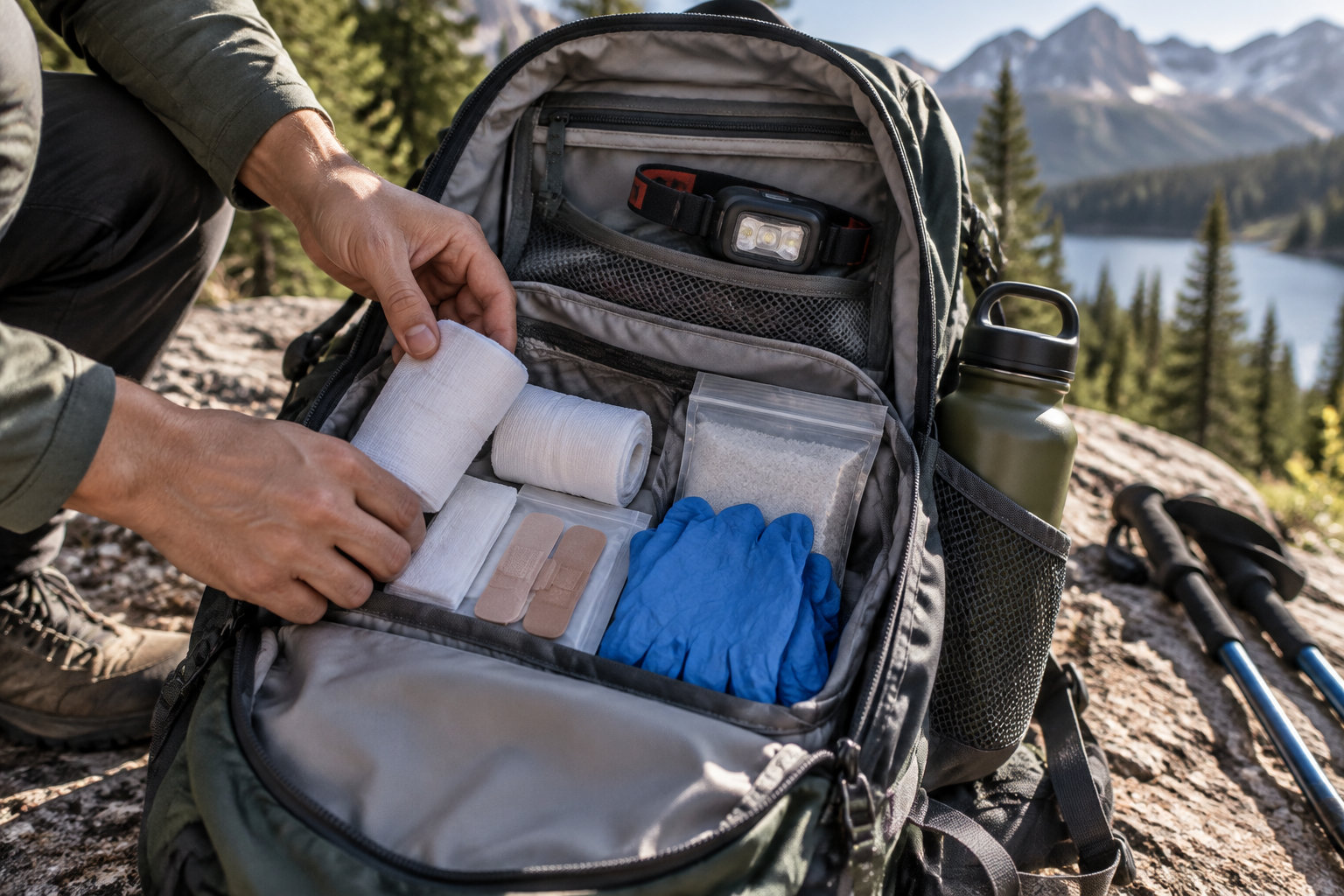
On a longer route, multiply dressings, tape, gauze, blister treatment, gloves and waste bags by the number of walking days. Add oral rehydration salts and digestive medication. Pack a headlamp with spare batteries. Bring enough personal medicine for the trip, plus a backup supply.
Everyone should carry their own prescribed medication in its original packaging. Write allergies, medical conditions, current treatments and an emergency contact on a waterproof card. Never take another hiker’s prescription medicine without medical advice.
Before you set off
- Your own prescribed medication, in its original packaging
- Allergies, medical conditions, current treatments and an emergency contact on a waterproof card
Carry sugar or glucose if anyone is at known risk of low blood sugar. Carry oral rehydration salts for fluid loss from heavy sweating, vomiting or diarrhoea. Use them as medical advice directs.
Confusion, collapse or severe dehydration are not problems a kit can solve.
A hot, exposed route calls for extra water, sun and lip protection. It also calls for a way to shade or cool someone.
A wet or cold route makes a survival blanket, a spare insulating layer, waterproof packing and reliable light or fire equipment more important.
Treating trail injuries and calling for help in France
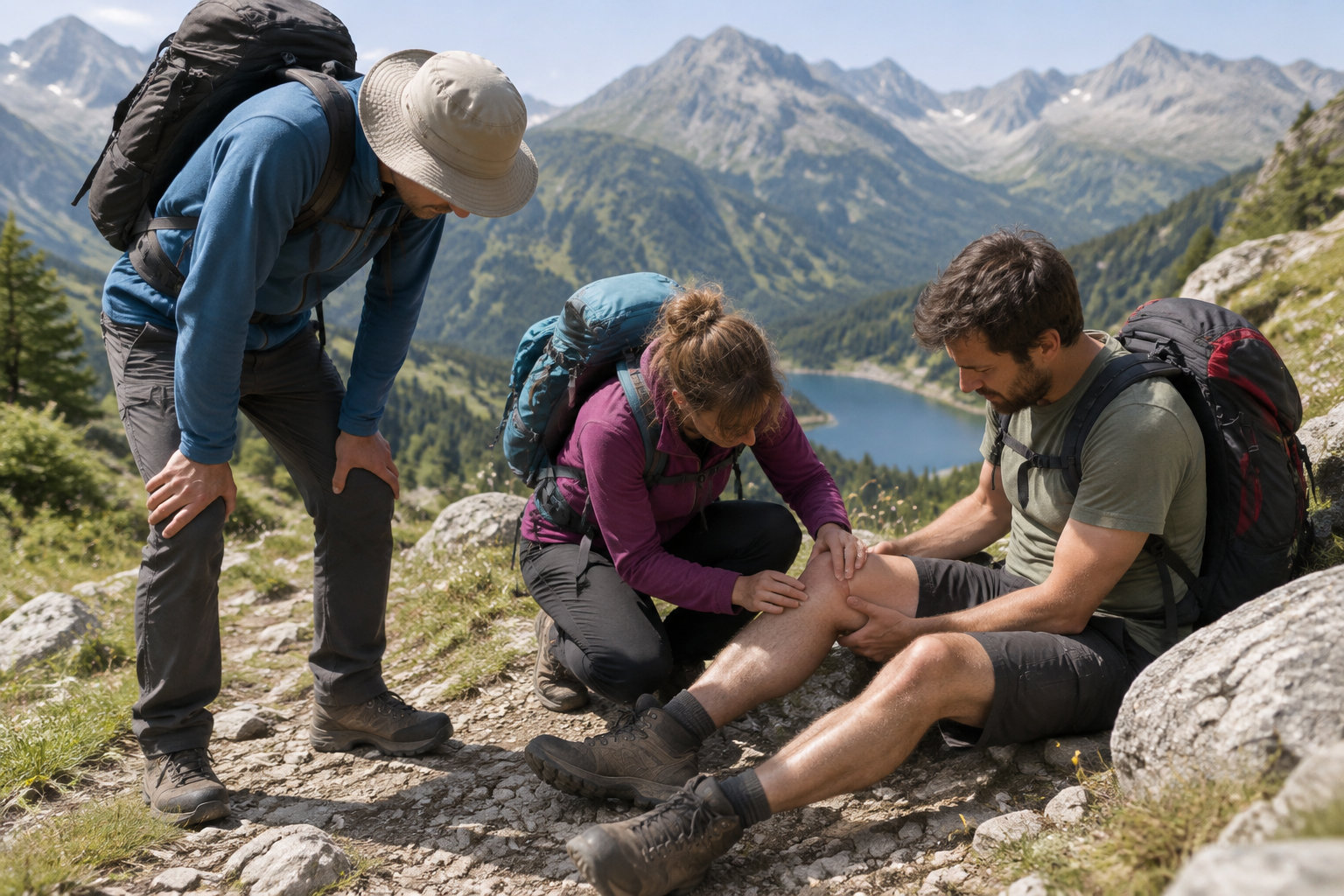
Protect yourself and the group first. Then check whether the injured person is conscious and breathing normally. Call 112 (the European emergency number), 15 (medical emergencies) or 18 (fire and rescue). Follow the operator’s instructions.
Match the response to the injury
| Situation | What to do |
|---|---|
| Small cut or graze | Wash your hands, rinse the wound, clean it and cover it. |
| Heavy bleeding | Apply firm direct pressure, lay the person down, keep them warm and alert the emergency services. |
| Blister | Clean and dry the area, cover it and reduce friction. |
| Suspected sprain or fracture | Stop walking, keep the limb still, protect the person from cold or heat, and get medical advice before attempting an evacuation. |
| Insect sting | Gently remove a visible stinger with disinfected tweezers and watch for swelling or breathing problems. |
| Suspected snakebite | Keep the person calm and still, immobilise the limb and call for help. |
Leave it in place and press around it. Pulling it out can make the bleeding much worse.
A sting in the mouth or throat, severe swelling or signs of an allergic reaction need immediate medical help.
- Do not suck out the venom.
- Do not cut the skin.
- Do not apply a tourniquet.
- Do not use a venom-extraction device.
Remove ticks and splinters without damaging the skin
Slide a tick remover between the skin and the tick. Turn it steadily in one direction, then check that the tick has come away. Clean the bite and wash your hands. Watch the area for about 30 days for an expanding red patch or unusual symptoms.
Use fine-point tweezers only on a superficial splinter that is easy to grasp. Do not dig. Seek medical advice if the object is deeply embedded, contaminated, near the eye or hard to remove.
Give rescuers the right information
When calling from a French trail, give the operator:
- your phone number;
- the exact location, route name and nearest landmark or trail marker;
- the number of injured people and their condition;
- the hazards present and the first aid already given.
Stay on the line. Send someone to guide rescuers only if it doesn’t leave the casualty alone.
Keep your hiking first aid kit dry, reachable and stocked
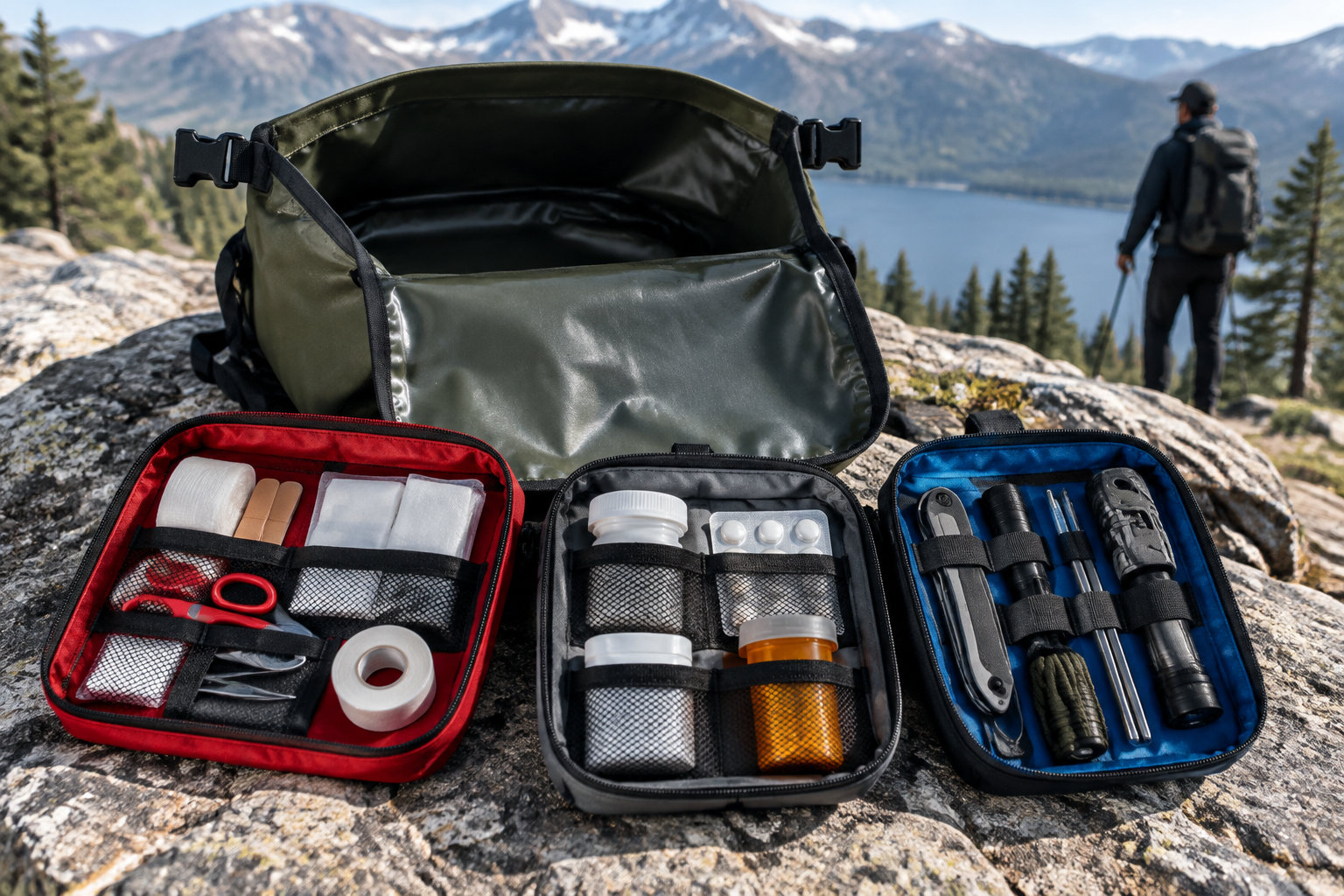
Use a waterproof pouch with internal bags. Keep wound care, medication and tools separate. A rigid case protects fragile items. A soft pouch saves space. Either one should open easily with cold or wet hands.
Place the kit near the top of the backpack or in an outside pocket. Do not put it under spare clothing. Keep the survival blanket, gloves, bleeding supplies and emergency information in the fastest-access compartment.
Before you head out
- Check the kit before every multi-day trip
- Check the kit after every outing
- Replace used dressings, damaged packaging, wet supplies and expired medicines
- Review the contents when the season, route, group or weather changes
Keep tablets and creams in clearly labelled single-dose or small original packages. Never move unidentified medicines into an unmarked bag.
Seal used dressings, gloves and sharps in a waste bag. Keep it sealed until you can dispose of it safely.
Start from the route you are actually walking, not from a generic list. Before your next outing, compare its distance, weather, terrain and your group’s medical needs with what you are carrying, then adjust the kit so it fits the trip you are taking.
FAQ
Can you use a household first aid kit on a hiking trail?
Yes, if the supplies suit a trail and you know how to use them.
Remove bulky packaging. Check for blister dressings, a tick remover, gloves, wound-cleaning supplies and a way to keep the person warm. Keep only products you recognise.
How do you prepare a first aid kit for children?
Use child-appropriate medicines, with doses recommended by a healthcare professional.
Add smaller dressings, extra blister protection, and any prescribed rescue medicine, plus each child’s allergies, conditions and emergency contact.
What should you do if your phone has no signal?
Retry the emergency numbers and ask other hikers for help.
Keep the person warm and watch their breathing and consciousness. Give rescuers landmarks, coordinates or signs to find you.