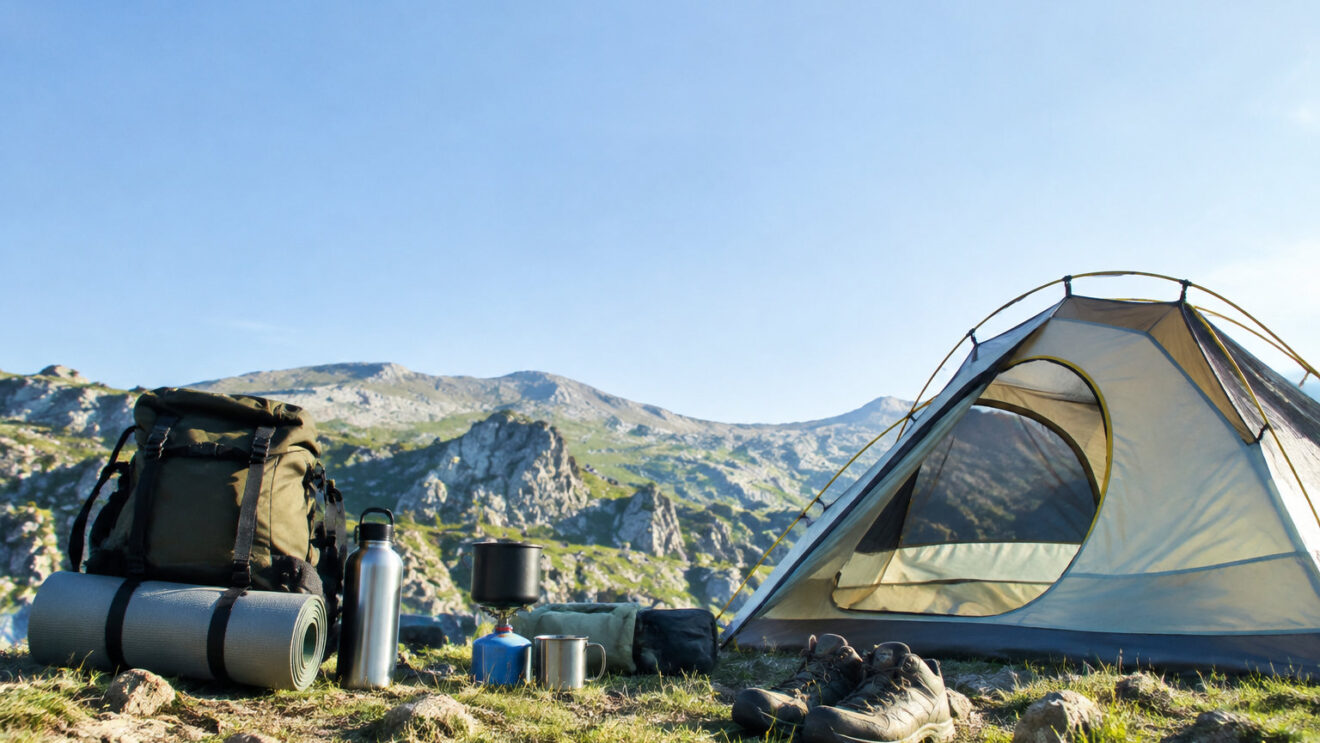
A first camping trip needs only a few core items: shelter, sleep and cooking. Yet beginners often buy extras and forget the basics.
The problem is knowing what to buy first and what to spend. This article gives a prioritized list of essentials, with tips on choosing each one and rough prices, so you can buy with confidence.
The core kit: shelter, sleep and cooking first
Shelter, sleep and cooking come first. For a first car trip, get one tent, a sleeping bag and a mattress per person, plus a stove, fuel, a pot, plates, cups and cutlery.
Pack at least 2 litres of drinking water per person per day, plus water for cooking and washing. For a first trip near home, see family campgrounds near Los Angeles.
Pack these items by system so nothing gets left behind:
- Shelter: one tent with its poles, pegs and mallet. Check them by pitching the tent at home first.
- Sleep: one sleeping bag and one mattress per person.
- Cooking: stove, fuel, pot, plates, cups, cutlery, can opener, dish towel, sponge, dish soap and garbage bags.
Choosing a tent that fits your group
For two people, choose a three-person tent over a two-person one. Once two people lie down, a two-person tent has little room left for the bags.
The extra place keeps your packs inside, out of the way of the sleepers. Before you buy, check the floor width and length, not just the listed capacity.
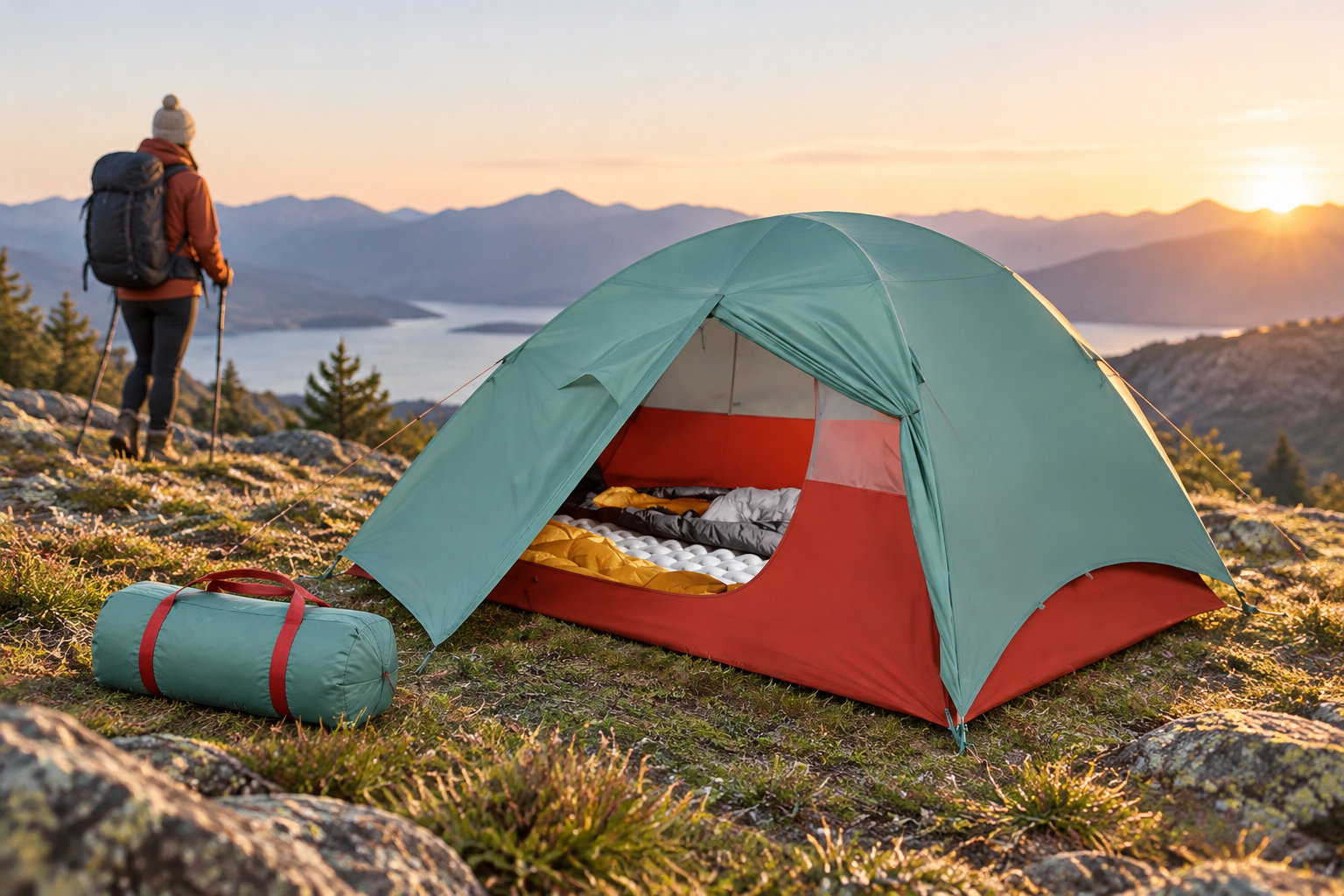
Camping and trekking tents suit different trips, so check the type before you buy.
| Criterion | Camping tent | Trekking tent |
|---|---|---|
| Main priority | Space and comfort on a fixed spot | Low weight and small size to carry |
| Weight | Lower priority | Example: Blow 3 at 1.89 kg |
| Packed size | Lower priority | Example: Blow 3 at 15 × 39 cm |
Sleeping bag and mat: matching the coldest night
Start with the coldest night you expect. Then pick a bag whose comfort temperature is at or below that figure. Comfort temperature is the low point where a reference sleeper lies relaxed and warm.
The Quechua Comfort 10 °C (24.99 €) suits a night at 10 °C or above. Colder nights need a warmer bag.
Match the mat’s R value to how cold the ground gets. An R of 1 to 2 suits summer nights, 3 to 4 suits three seasons, and 5 or more suits cold nights and snow.
Put the mat under your bag. It cuts the cold from the ground and helps your bag hold heat. In cold weather, pick a higher R.
Stove and cookware for a simple first meal
A gas stove is the simplest choice for a first trip. Before buying, check that the cartridge fits the stove’s connector. A Campingaz CV 300+ holds 240 g of gas and has a valve, so it only fits valve-compatible stoves.
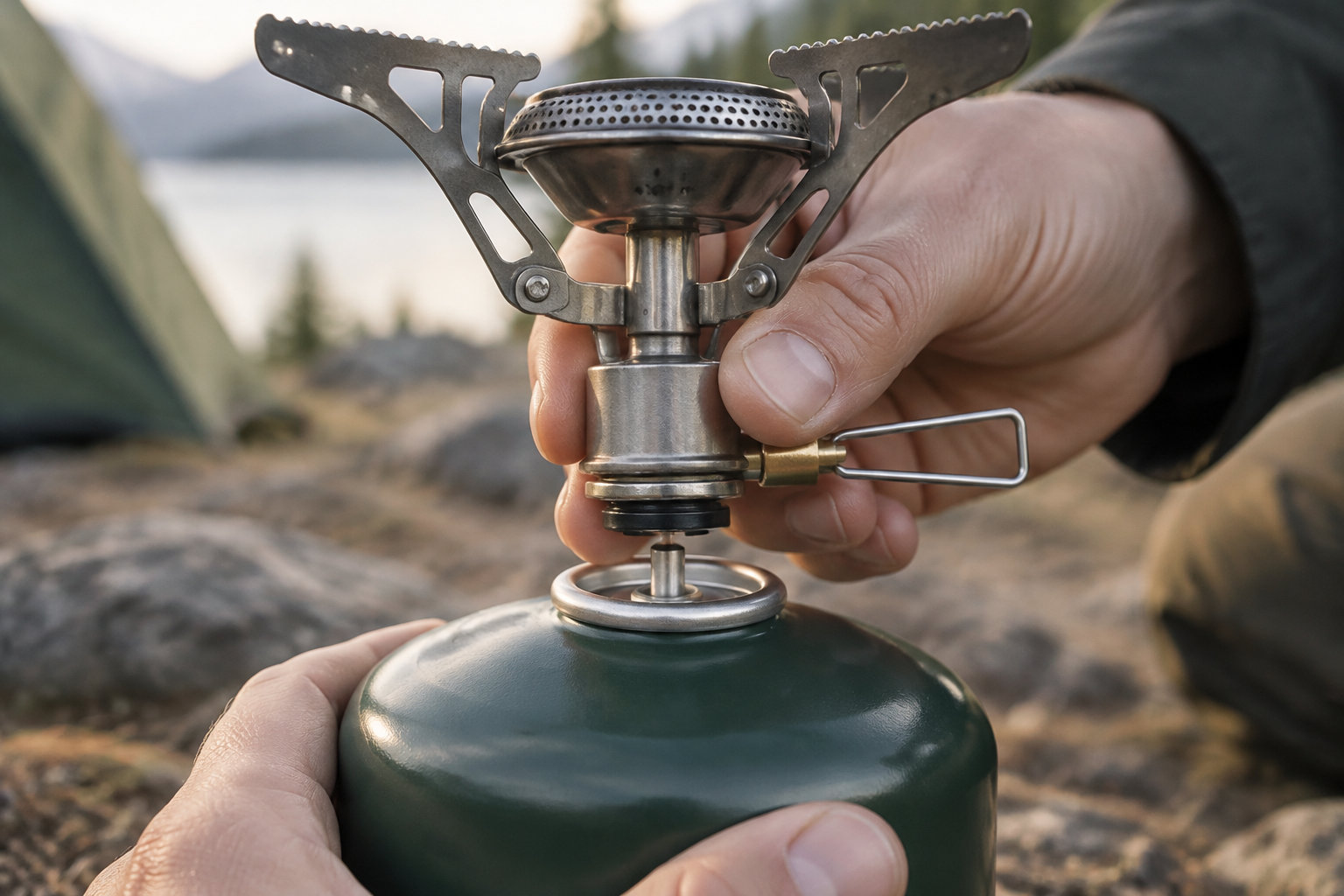
For a first night out near Los Angeles, use the tent camping guide to plan your weekend.
Your first meal needs little kit:
- One pot and one pan.
- Choose a passive cooler with ice packs unless your site has power.
- Food stays cold for a time set by the cooler, the ice and the heat.
- Campgrounds ban open wood or charcoal fires, so cook only on your stove.
- Keep the stove in good shape and skip it in strong wind.
Tarp, groundsheet and protection from rain
A tarp under the tent protects its floor from abrasion and sharp stones. Fold its edges under the tent, not out past it, so rain can’t collect between the two layers.
Point the tent’s entrance away from the wind and open the vents to reduce condensation. Keep wet clothes in the vestibule, outside the sleeping area.
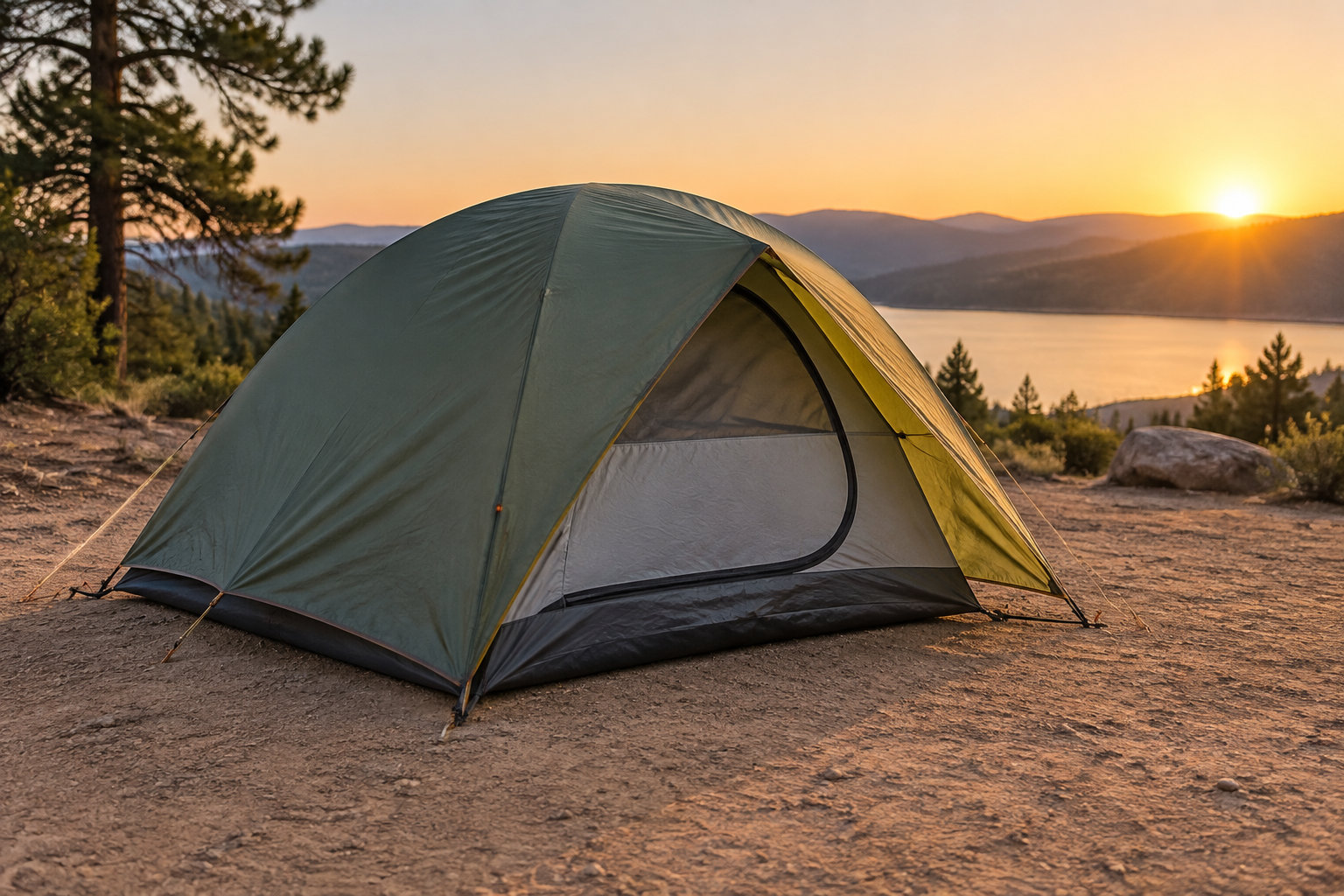
Pick a flat pitch that sits higher than the dips around it. Avoid hollows and spots where rainwater would flow, because it gathers there overnight.
A tarp stretched over the cooking area gives shade and shelter from light rain. Tie it on a slope so water runs off instead of pooling on top.
Headlamp, chair and small comforts
Headlamps
A headlamp leaves both hands free to cook or pitch the tent in the dark. Check two figures: lumens, which set the brightness, and battery life on low power, which sets how long it lasts.
The Quechua HL 50 gives 50 lumens and runs on batteries for 20 hours. Basic battery models cost about 4 €. The rechargeable Quechua HL100 USB gives 120 lumens and costs 14.99 €, so choose it if you want more light.
Camping chairs
A camping chair is a comfort item, not a priority: the tent, sleeping bag and stove come first. If you buy one, check three things: its weight, its folded size and its armrests.
Weight and folded size matter most if you walk to your pitch. Armrests help you push up from a low seat. For small comforts, take earplugs and a sleep mask, which help you sleep on a noisy campsite.
What to spend, and where to buy it used
Buying new for the core kit
Spend on the tent and the sleeping bag first. A three-person instant tent costs about 75 to 220 €, and the Quechua 2 Seconds three-person sits at 74.99 €.
Together with the Quechua Comfort 10 °C bag at 24.99 €, that’s about 100 €, before mat, stove and cookware. Choose the bag’s comfort rating from the coldest night you expect.
Set one budget per system, and treat brand prices as examples only, since they change:
- Shelter: give it the biggest share, since the tent keeps you dry all night.
- Sleeping: give it the next share, since the bag and mat decide how well you sleep.
- Kitchen: keep it the smallest, with a stove, a pot and a few utensils.
Buying second-hand safely
Check these points before buying a used sleeping bag, and again before you leave:
- Zip: it must open and close along its full length.
- Filling: it must stay spread evenly through the bag.
- Cleaning: wash it only as the model’s care label says.
- Tent: every part is there, and it sets up properly.
- Stove: check the connection, a cartridge that fits, and the lamp.
Shelter, sleep and cooking come first, and the tent and sleeping bag take the biggest share of your budget. Choose the bag for the coldest night you expect, and check every item before you leave.
Your next step: pitch the tent at home, lay out the full list, and buy only what is missing.
Frequently asked questions
What is the most forgotten item when camping?
The most forgotten items are small ones: a can opener, a dish towel and toilet paper. They cost little, but meals and daily needs depend on them. Put all three on your list before you load the car.
What is the 3-3-3 rule when camping?
The 3-3-3 rule comes down to three habits: follow the rules of the campground where you stay, keep your stove in good condition, and never light an open fire.
Campground rules change from site to site, so check them before you arrive.
Is it better to sleep under a tarp or in a tent?
For sleeping, a tent is better than a tarp. A tent gives you an enclosed space and protects you better from wind and rain. A tarp gives only open shelter from sun or light rain, so it suits fine weather.
What can I use instead of a tarp?
Use a tent with its rainfly, the second roof that goes over the inner tent. It gives a closed shelter against rain. For cover over the kitchen area, an awning works if the campground allows it. Check the rules first.