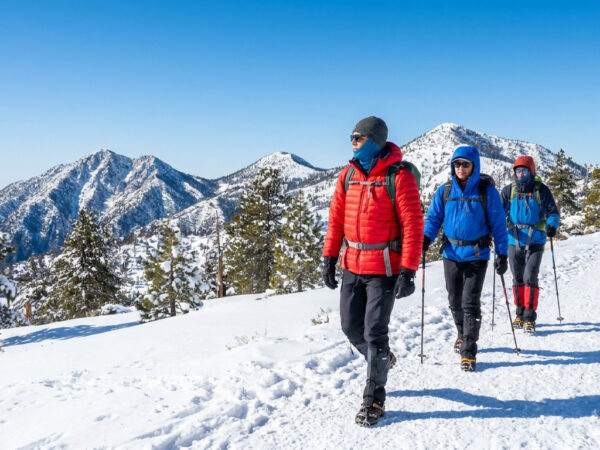
Adopting standardized hiking trail etiquette for beginners reduces environmental degradation and mitigates interpersonal friction within shared wilderness corridors. Mastering these protocols ensures that every excursion remains a disciplined exercise in safety and conservation rather than a source of ecological or social conflict.
Neglecting the established hierarchy of yielding or failing to adhere to Leave No Trace principles frequently results in avoidable accidents and permanent destruction of fragile habitats. Prioritizing the acquisition of these technical competencies is mandatory for navigating complex terrains while upholding the collective integrity of the outdoor experience.
- Mastering Hiking Trail Etiquette for Beginners through Yielding Protocols
- Implementing Environmental Stewardship via Leave No Trace Principles
- Regulating Social Dynamics and Auditory Courtesy Standards
- Executing Precise Canine Management and Communication Standards
Mastering Hiking Trail Etiquette for Beginners through Yielding Protocols
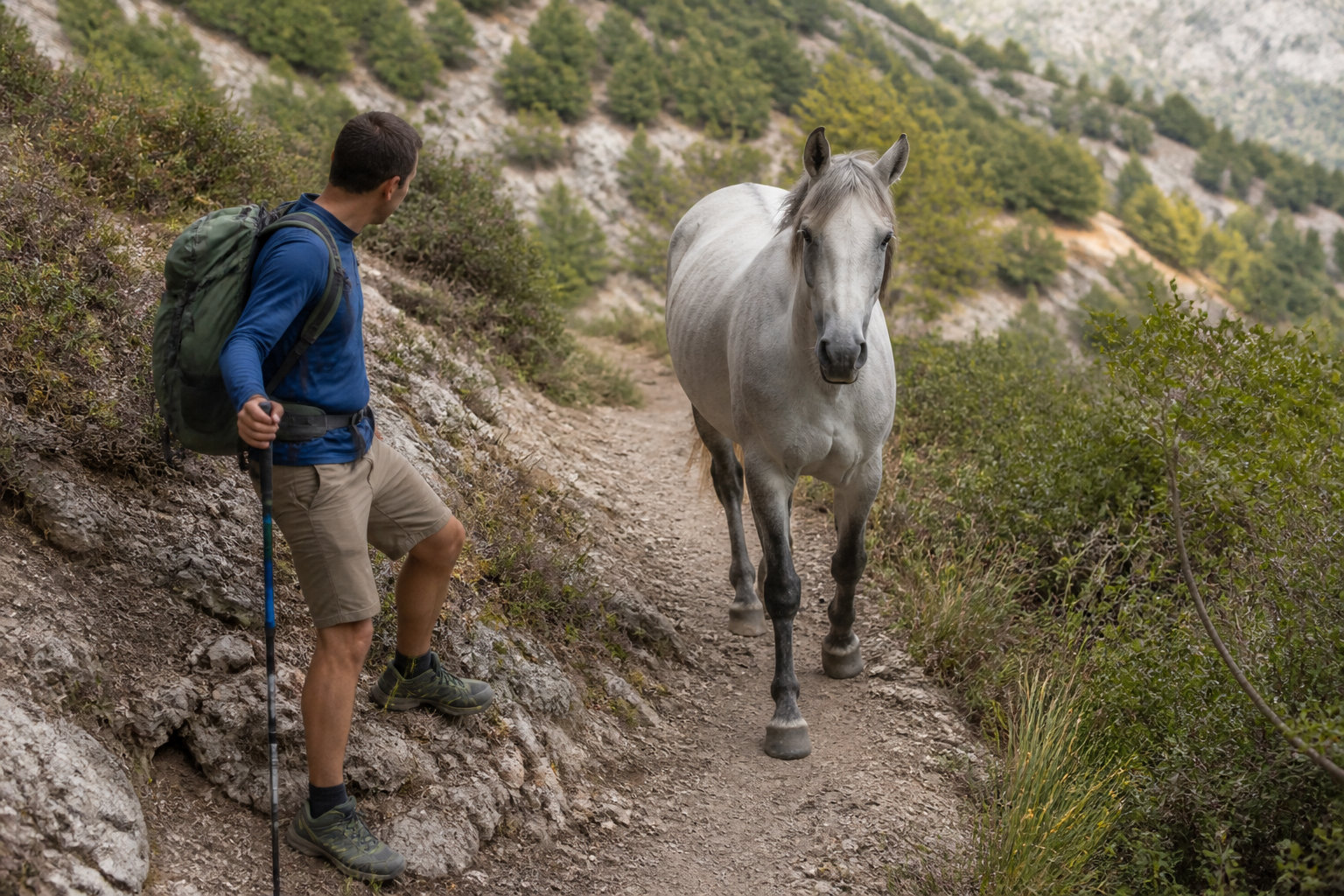
Uphill hikers always hold the right of way to maintain aerobic rhythm, while all trail users must yield to horses by stepping off-path. These protocols ensure safety on steep terrain and prevent dangerous animal spooking.
Effective management of trail interactions requires understanding the physiological demands of ascending terrain.
Prioritizing Uphill Momentum and Stock Animal Safety
Gravity imposes significant physical strain during steep ascents. Restarting momentum after a full stop proves difficult for those climbing. Yielding ensures these hikers maintain a steady heart rate.
Step to the downslope side when yielding to horses; speak softly to avoid spooking the animal.
Large pack animals easily spook on narrow bends. Hikers must step to the downslope side immediately. Speaking softly helps the horse recognize human presence, reducing the risk of sudden movements.
Yielding to stock isn’t just polite; it’s a safety requirement because a spooked horse can cause catastrophic trail accidents.
Maintaining awareness of shared-use dynamics is essential for preventing collisions.
Managing Shared-Use Encounters with Mountain Bikers
The standard yielding triangle dictates that mountain bikers yield to hikers and horses. However, physics dictates that hikers often detect cyclists first. Communication remains the primary tool for safe passage.
Situational awareness dictates keeping eyes up. One should never assume a rider can stop instantly. Anticipating these encounters prevents sudden braking and trail erosion.
Mastering these protocols is vital when exploring beginner-friendly trails. Adhering to established norms protects the infrastructure and ensures long-term access for all users.
Implementing Environmental Stewardship via Leave No Trace Principles
But staying safe around others is only half the battle; protecting the dirt beneath your boots matters just as much.
Preserving Trail Integrity by Avoiding Switchback Cutting
Cutting corners accelerates trail degradation. This unauthorized shortcutting creates new water channels. Consequently, rapid erosion destroys the path for everyone else very quickly.
Trail widening remains a significant threat. Hikers must stay in the center of the mud. Walking on edges kills fragile vegetation and expands the scar on the land.
Stick to the marked path. Your shortcut is a permanent wound to the hillside.
Executing Proper Waste Disposal and Trash Management
Pack out every single thing. This includes orange peels and nut shells. They don’t belong in this specific ecosystem.
| Waste Type | Decomposition Time | Disposal Method |
|---|---|---|
| Plastic bottle | 450 years | Pack it out |
| Orange peel | 6 months | Pack it out |
| Paper tissue | 2-4 weeks | Pack it out |
| Human waste | Cathole 6-8 inches deep | Bury away from water |
Review the trail etiquette every new hiker needs to know before departing.
Mitigating Human Impact on Local Wildlife Habitats
Wildlife should stay wild. Feeding animals ruins their natural foraging instincts. It also makes them aggressive toward future hikers who have no food.
Secure your snacks properly. Use scent-proof bags if necessary. A fed bear is often a dead bear because authorities must intervene.
Pack out all trash, stay on marked paths, and leave the trail cleaner than you found it.
Observe from a distance. Use binoculars, not your feet, to get a closer look.
Regulating Social Dynamics and Auditory Courtesy Standards
Beyond the physical impact, the atmosphere created through vocal projection and equipment management defines the collective wilderness experience.
Controlling Noise Pollution and External Audio Devices
Eliminate Bluetooth speakers to preserve the natural soundscape. Most hikers seek the auditory tranquility of wind and wildlife, making external playlists an unwelcome intrusion on solitude.
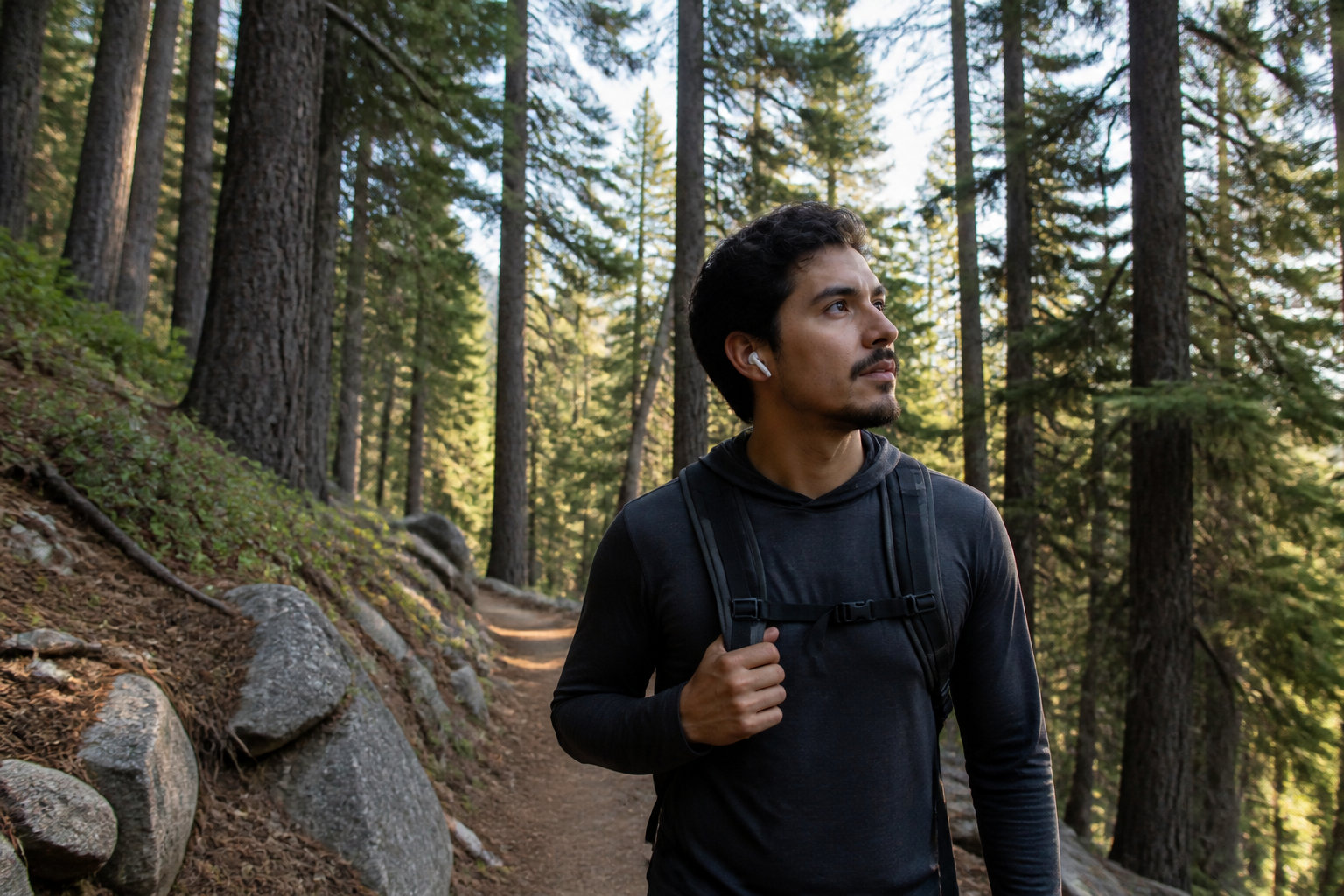
Utilizing a single earbud facilitates musical enjoyment while maintaining situational awareness. This practice enables the detection of approaching mountain bikers or rattlesnakes. Safety and courtesy remain intrinsically linked.
Maintain a low volume or use one earbud only to ensure you can hear environmental cues and warnings from other trail users.
Respecting the natural soundscape is paramount. Silence represents a rare, valuable commodity within modern environments.
Optimizing Group Size and Trail Spacing for Flow
Maintaining small, manageable groups minimizes ecological pressure and avoids path obstruction. Parties exceeding ten individuals should split into smaller units to reduce wildlife disturbance and congestion.

Hike in a single file to prevent trail widening and facilitate efficient passing. Walking abreast forces others off-trail, compromising vegetation and disrupting the established flow of movement.
Prioritizing limited group sizes optimizes logistical efficiency and environmental preservation. Mastering group dynamics ensures a professional standard of trail conduct for all participants.
- Lower ecological impact on fragile terrain.
- Easier communication between party members.
- Faster movement through technical sections.
- Better wildlife spotting opportunities.
Executing Precise Canine Management and Communication Standards
Finally, how we handle our pets and our voices determines the final layer of trail safety.
Enforcing Leash Compliance and Pet Waste Protocols
Maintain strict leash control at all times. This tactical measure shields domestic animals from apex predators and prevents unauthorized interactions. Respecting social boundaries remains paramount for collective safety.
Environmental data confirms that pet waste introduces toxic levels of nitrogen and phosphorus. Utilizing proper hiking protocols prevents the degradation of local flora. Fertilizer runoff destabilizes fragile mountain ecosystems.
Execute immediate removal of all waste. Abandoning plastic bags constitutes a severe environmental violation.
Utilizing Verbal Signals for Safe Overtaking Maneuvers
Employ vocal alerts prior to executing passing maneuvers. Articulating “on your left” effectively mitigates startle responses. Such precision fosters a professional community standard among wilderness participants.
Verbal signals: Use phrases like ‘on your left’ before passing and greet others to establish rapport and safety.
Exchange brief acknowledgments with approaching parties. A concise greeting facilitates immediate rapport and situational awareness. Identifying distress in others requires active, professional engagement during these brief encounters.
Clear communication is the ultimate tool for preventing collisions and fostering a welcoming environment for every explorer on the mountain.
Mastering hiking trail etiquette for beginners necessitates prioritizing uphill momentum, adhering to Leave No Trace principles, and maintaining auditory courtesy. Implementing these rigorous protocols immediately preserves ecological integrity and ensures collective safety. Diligent compliance fosters a sustainable wilderness future where every explorer thrives within a respected natural landscape.
FAQ
Which trail user possesses the primary right of way during uphill encounters?
Ascending hikers maintain the definitive right of way to preserve their aerobic momentum and physical rhythm. Gravity dictates that restarting an upward climb is significantly more strenuous than pausing a descent; therefore, descending parties must yield by stepping aside to permit an uninterrupted ascent.
What protocols should be observed when encountering horses or pack animals?
All hikers and mountain bikers are strictly required to yield to stock animals by stepping off the trail, preferably toward the downslope side to avoid appearing as a predator. Maintaining a calm demeanor and speaking softly ensures the animal recognizes human presence, thereby mitigating the risk of spooking, which can lead to catastrophic trail accidents.
How should mountain bikers manage interactions with hikers on shared-use paths?
The established yielding triangle mandates that mountain bikers yield to both hikers and equestrians. While hikers often detect approaching cyclists first due to line-of-sight advantages, riders must maintain situational awareness and control their velocity, acknowledging that they cannot achieve instantaneous stops on steep descents or unstable gravel surfaces.
Why is maintaining the integrity of switchbacks considered a critical environmental duty?
Cutting across switchbacks initiates rapid soil erosion by creating unintended water channels that bypass the trail’s engineered drainage systems. This practice destroys fragile vegetation and leads to permanent scarring of the hillside, eventually compromising the structural viability of the entire path for all future users.
What are the formal requirements for disposing of organic and inorganic waste?
The Leave No Trace framework demands the total removal of all refuse, including organic matter such as orange peels and nut shells, which are non-native to these specific ecosystems. Proper waste management involves packing out all litter or, in the case of human waste, utilizing a cathole excavated to a depth of six to eight inches, situated well away from water sources.
How does noise pollution affect the collective wilderness experience?
External audio devices and Bluetooth speakers constitute an unacceptable intrusion upon the natural soundscape, which many explorers seek for solitude and auditory clarity. Utilizing a single earbud is the recommended compromise, as it permits personal audio consumption while ensuring the hiker remains alert to environmental cues such as approaching wildlife or verbal signals from other users.
What standards govern group dynamics and formation on narrow trails?
Parties should be restricted to small numbers to minimize ecological impact and facilitate efficient movement; groups exceeding ten individuals are encouraged to bifurcate. When encountering other users, groups must transition into a single-file formation to prevent trail widening and ensure adequate spacing for safe overtaking maneuvers.
Why is strict leash compliance mandatory for domestic dogs in natural habitats?
Enforcing leash compliance serves to protect domestic pets from local predators and prevents the harassment of wildlife or other hikers who may harbor aversions to animals. Furthermore, canine waste introduces toxic elements to local flora, necessitating that all excrement be bagged and physically removed from the environment rather than left trailside.
Which verbal signals are necessary to facilitate safe overtaking?
Executing a safe pass requires clear communication, typically initiated by a calm vocalization such as “on your left” to prevent startling the preceding hiker. Establishing rapport through a brief greeting not only fosters a welcoming environment but also serves as a safety check to ensure all trail users are in good physical condition.