About ten minutes of steady rubbing is enough to start a blister on the trail.
A hot spot can turn into a bigger wound within a few steps, so you need to decide right away whether to pop it, cover it, or keep walking.
This guide shows what to do on the spot to protect the skin and avoid making the damage worse.
How to treat a blister while hiking starts with the first hot spot
A hot spot is an early warning. Burning or rubbing? Stop at once. A blister can form after about 10 minutes of steady rubbing, depending on friction and moisture.
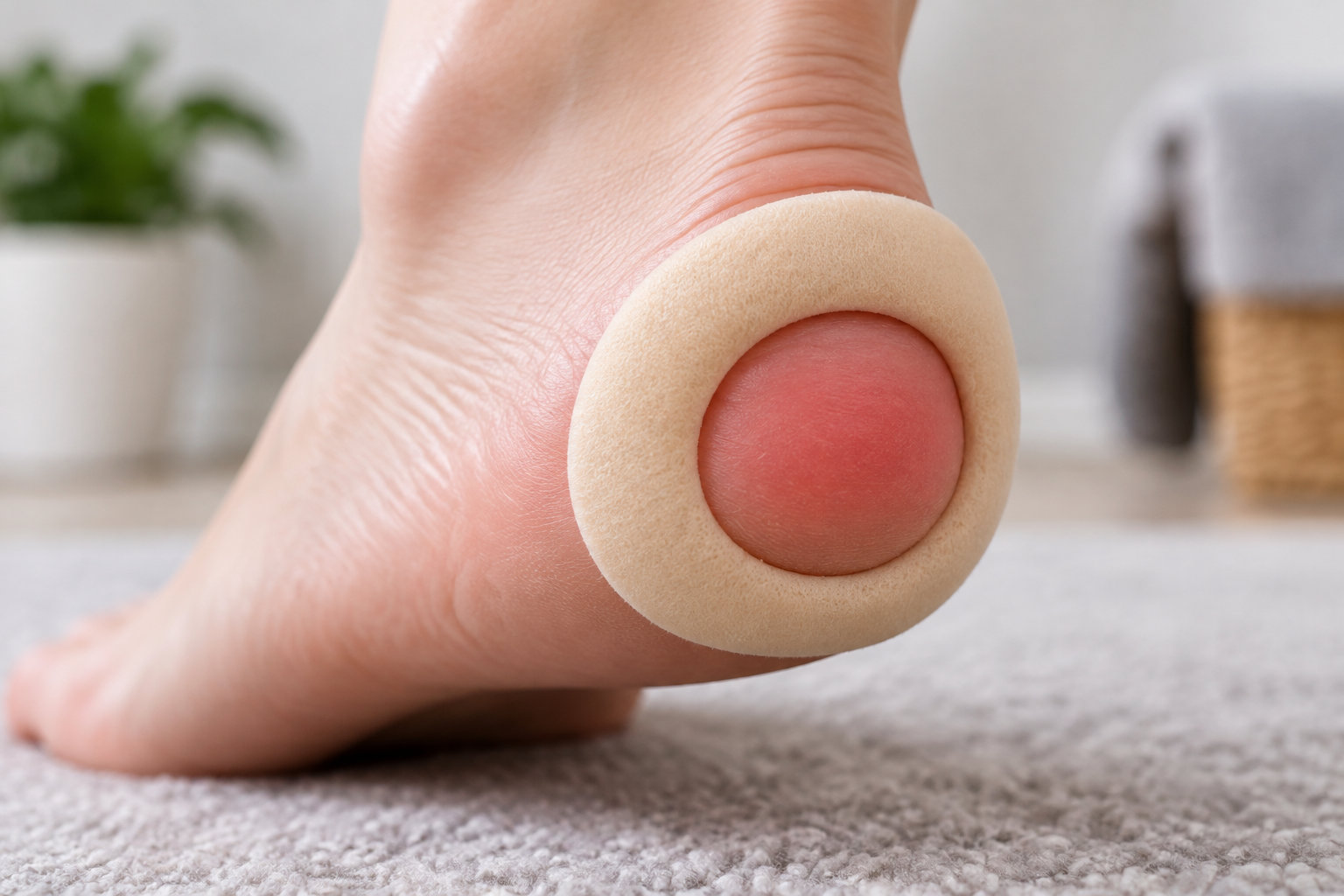
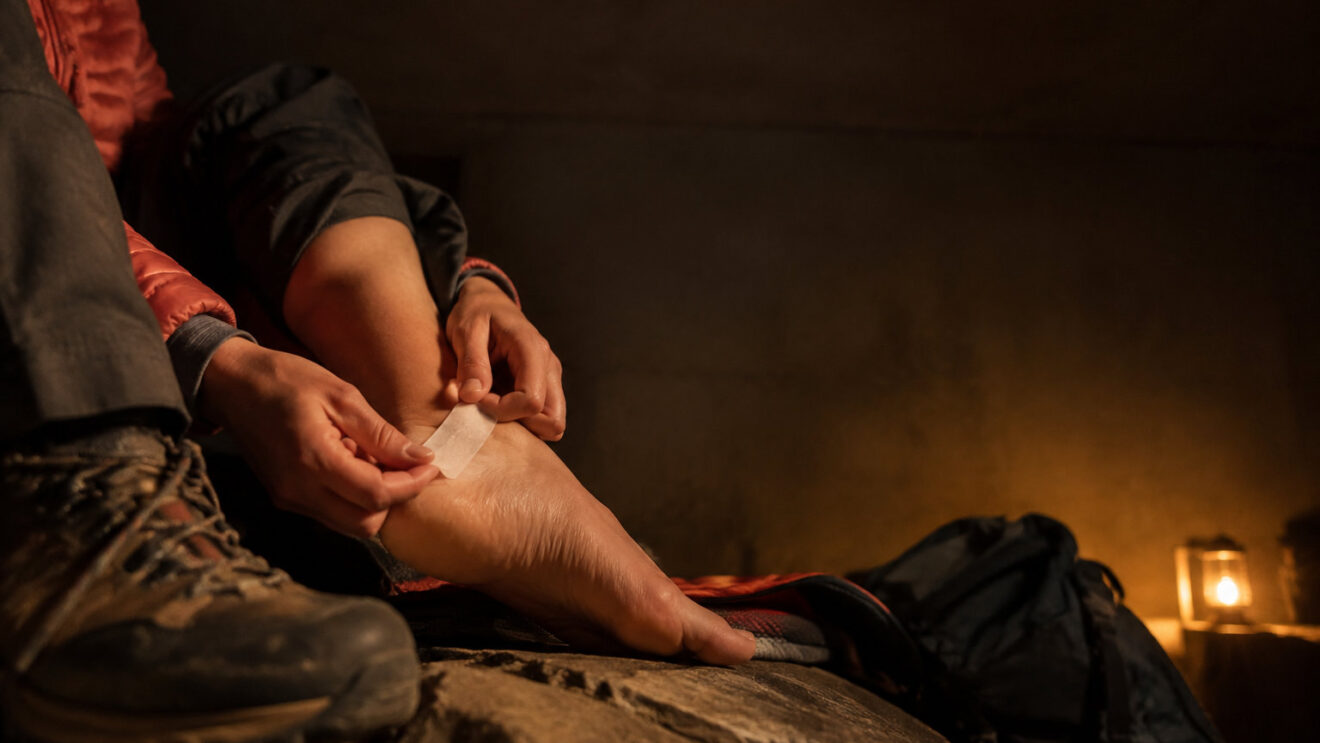
Take off your boot and sock. Check the skin, dry your foot, and protect any red area before you walk on. For dressings to carry, see day hike first-aid kits.
Protect the spot in this order:
- Put on dry socks and hang the wet pair outside your pack.
- Cut a foam or moleskin pad with a hole for the blister, so nothing presses on it.
- On a heel or toe, shape the pad with smooth edges, so they do not rub.
- Add moleskin or tape over the pad for extra protection.
Should you pop a blister on the trail? Usually not
An intact blister
The skin over an intact blister protects the raw skin underneath, so leave it in place. If it bursts on its own, wash your hands first, let the fluid drain, and do not peel off the loose skin.
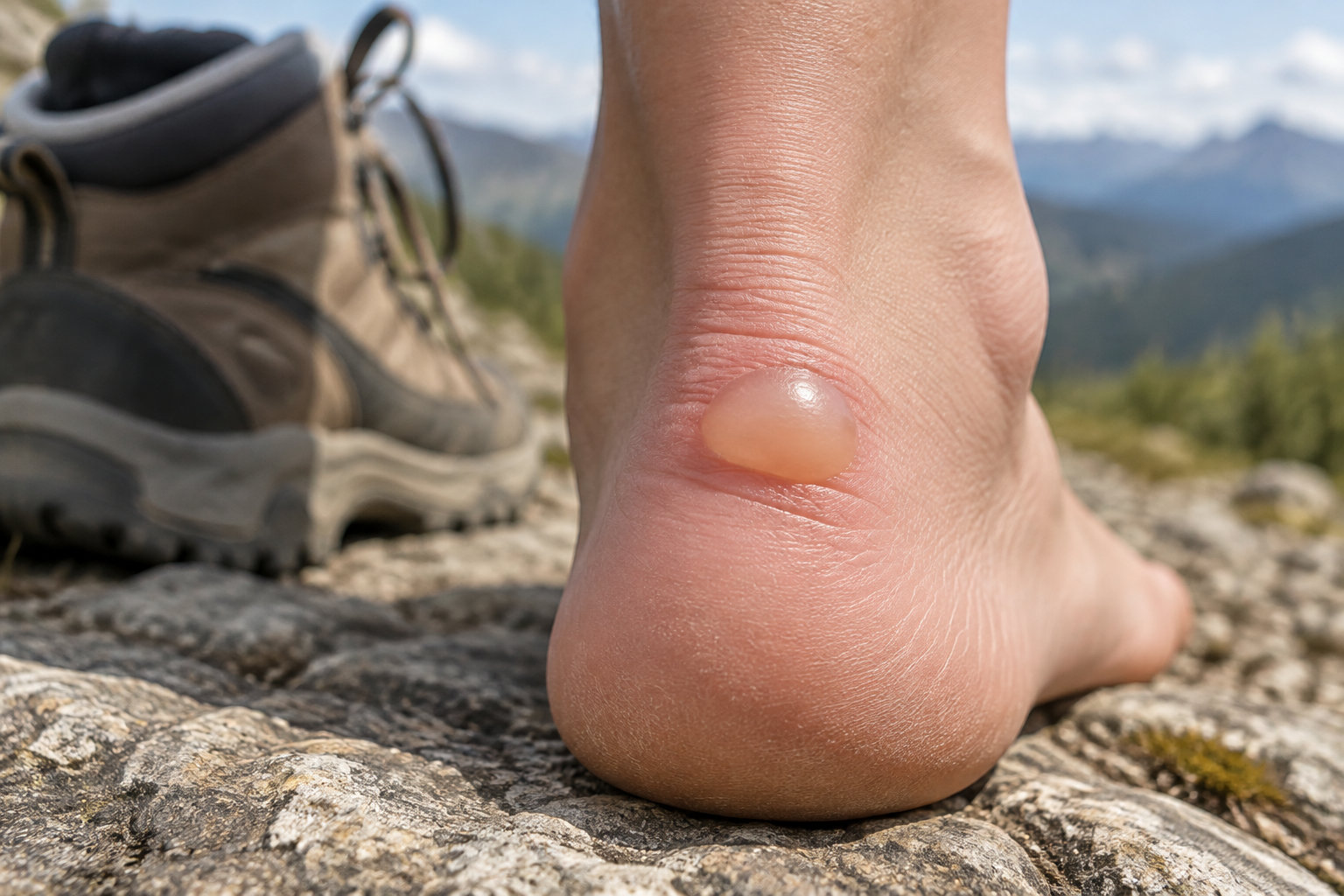
A blister under 5 mm across needs only a pressure-relieving pad or a hydrogel or hydrocolloid dressing. Either one keeps the pressure off the skin while you walk.
A large, very painful blister
Don’t open a blister as a routine step. A large blister that hurts too much to walk on is the exception: if it is larger than 5 mm across, drain it and leave its skin cover in place.
Before you pierce it, wash the blister and the skin around it. Clean the needle with an alcohol wipe or heat.
Pierce near the base of the blister and let the fluid drain, but never peel off the skin cover. Without it, the raw skin is open to dirt and bacteria, and every step rubs it directly.
Then cover the area with a dressing and add a donut-shaped pad so nothing presses on it.
Covering or airing out depends on whether the skin has broken
Check whether the skin is still whole. If it is, cover the blister with a soft plaster or padded dressing and keep it clean.
If the skin has broken, let the fluid drain before covering it, and keep the loose skin in place. It still shields the tender skin below.
A hydrocolloid dressing forms a moist cover over the blister. It protects the area, reduces pain, and helps the skin heal.
Most blisters heal within a week. A friction blister can take one to two weeks, so expect the spot to stay tender for that long.
Which blister plasters and dressings suit the trail
Moleskin and foam pads
A doughnut-shaped pad is a ring of foam with a hole in the middle. Put the hole over the blister. The foam around it cushions the spot and lifts the pressure off the blister, which the pad never touches.
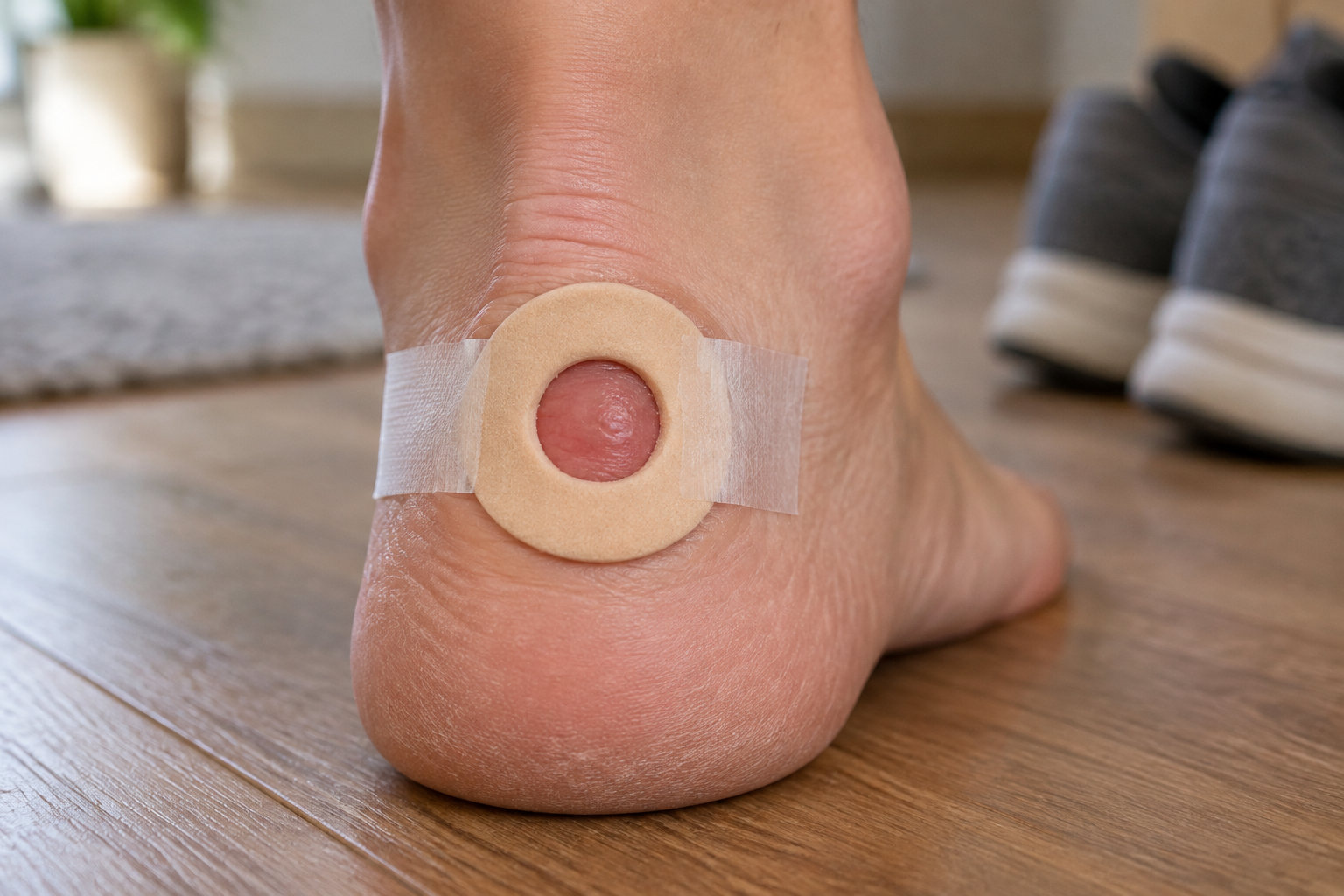
If the pad needs more protection, tape over the pad itself, not over the blister.
Hydrocolloid and gel dressings
Hydrocolloid and gel dressings do not suit every spot, so check the situation first.
| Situation | Hydrocolloid | Hydrogel |
|---|---|---|
| Hot spot | Yes: it covers the warm area before it becomes a blister | Yes |
| Blister under 5 mm across | Yes | Yes |
| Intact blister | Yes: it protects the skin over the blister and can reduce pain | Use a hydrocolloid instead |
Athletic and medical tape
Dry your foot and the spot before you apply tape. Once tape gets wet, it stops working, and sweat or a damp sock can lift it fast.
A ready-made option is the Spenco 2nd Skin Blister Kit, about €15. It holds six moist pads and six adhesive knit strips, plus two larger sheets, so everything is already cut to size.
A trail blister kit fits in a pocket and covers the basics
A small kit fits in a pocket and covers the basics. The Blister Medic kit from Adventure Medical Kits has 22 moleskin pads, six alcohol prep pads and six antiseptic wipes.
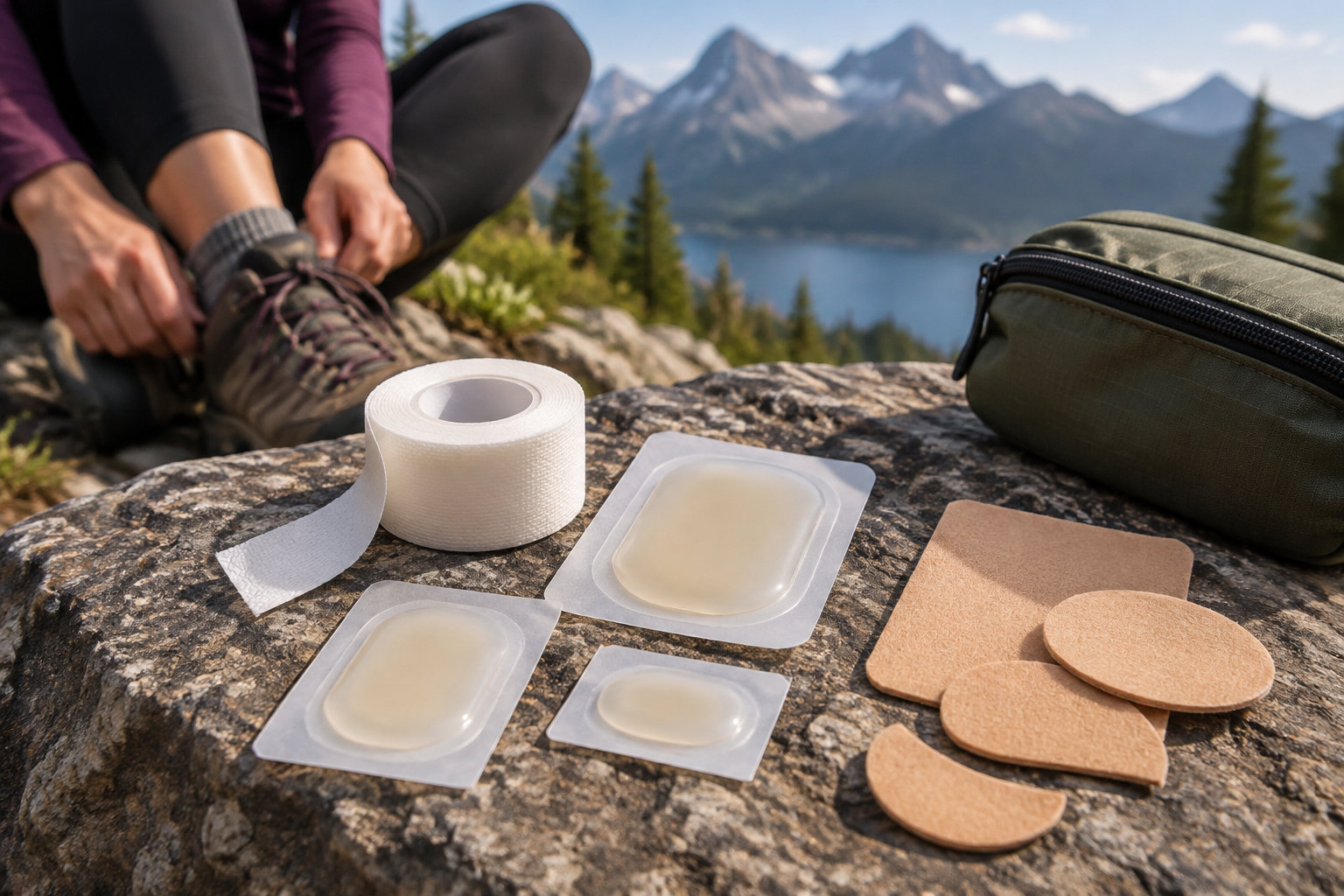
Only a large, very painful blister needs drainage gear, so you can leave it out for small ones. For a creek crossing, see the Escondido Falls hike gear list.
Each item has a job:
- Paper medical tape holds pads in place, on dry skin only.
- Blister dressings, with pads or gel, cover hot spots and intact blisters.
- Moleskin, cut to size, covers hot spots that dressings don’t fit.
- Duct tape covers a hot spot in a pinch, but keep it off open skin.
- Spenco 2nd Skin Moist Pads are not sterile: never use them on open wounds.
Walking on with a blister: when it is safe and when to stop
Often you can keep walking once the spot is protected and the rubbing has stopped. Pain and skin condition decide. If pain returns, stop and adjust protection.
At each rest stop, check the padding. Replace or smooth it if it shifts, gets wet, or rubs the skin. If you cannot keep the spot protected, stop for the day or turn back.
Stop and get medical help if you notice any of these:
- The blister is very painful.
- The skin around it feels hot, or the redness or pain keeps growing.
- The fluid inside is green or yellow, like pus.
- Red streaks run away from the blister up the foot or leg.
Preventing blisters before the hike: socks, fit and early breaks
Blisters come from friction: each step rubs the same spot, and fluid fills the lifted skin. Your boots are the first thing you can control.
Choose boots that fit without rubbing or slipping, and break them in before a long hike. For an easy first hike, see beginner-friendly trails in Los Angeles.
Prevention steps and their evidence:
- Synthetic or wool socks, not cotton: moisture-wicking socks can help.
- A thin liner sock under the outer sock reduces rubbing.
- A 20% aluminum chloride solution on the soles, applied at least three days in a row, cut blisters by 27% in one double-blind, placebo-controlled study.
- Moleskin, tape, creams, powders: evidence is limited.
- Check your feet after each hike for hot spots.
Stop at the first burning feeling and cover the spot. Leave the skin over a blister in place. Keep walking only when the rubbing has stopped and the padding holds.
Check the padding at each rest stop. If the pain grows or the skin turns red, hot, or shows pus, see a doctor.
Frequently Asked Questions
What dries out a blister fast?
Keep the blister clean and dry, then cover it with a soft plaster or a padded dressing. Wet skin softens and rubs more easily, so dry the area before you cover it.
Can you use duct tape on a blister?
Yes, over a hot spot, but not on an open blister.
Duct tape grips hard, so peeling it off tears the thin skin that is left and pulls at the raw skin underneath. Use it only when nothing else is in your kit.
Is it safe to put antibiotic ointment on a blister?
Yes, but only after the blister has drained. Then an antibacterial ointment under gauze or moleskin is one dressing option. If the skin is still whole, skip the ointment and use a soft plaster or padded dressing instead.
How long does a blister take to heal?
Most blisters heal within a week. A friction blister, the kind a boot causes, can take one to two weeks. Until the skin feels firm again, keep the spot covered and dry.