A trail that feels fine at 8 a.m. can be dangerous by early afternoon in a Southern California summer.
So the real question is whether the heat is too much for today, and if it isn’t, how to hike it safely. This article shows you how to check the heat, plan your hike, and act fast when someone overheats.
How hot is too hot to hike in Southern California
No single temperature tells you when to stop. In August, Pasadena averages a high near 34°C and Woodland Hills about 36°C, while Santa Monica stays near 25°C. Humidity and days of heat change how hard it feels.
Use the HeatRisk scale instead, which runs from yellow to magenta. It takes into account how rare and how long the heat is, plus humidity and health effects.
For city trails and early starts, see urban hiking trails in Los Angeles.
Open the HeatRisk map and find your exact trailhead.
Check the forecast for each of the next seven days.
Skip any day at red or magenta.
On humid days, look for storm warnings before you leave.
Be ready to cancel if conditions change.
For coastal shade options, see Santa Monica Mountains trails.
Timing your hike and choosing a cooler route
Start early and do the biggest climb first. In Los Angeles County, the temperature often peaks between 11 a.m. and 3 p.m.
In early July, sunrise is around 5:45 a.m., so a dawn start keeps the climb in cooler air.
An evening hike is an option only where night hiking is allowed, so check the rules and alerts first. For an easy route close to Los Angeles, see the 12 beginner-friendly trails in Los Angeles County.
Check the water at the trailhead before you count on it. Trail Canyon, Bear Creek and East Fork Day Use Parking have no potable water.
Choose a shaded trail or one near water. Trail Canyon Falls is 3.2 km one way, and its falls edges can be slippery.
Check alerts before you go: Altadena Crest is closed.
For a waterfall hike, plan around seasonal water. See the Escondido Falls hike in Malibu first.
Water, electrolytes and food for the trail
In heat, you can lose about 1 liter of sweat an hour, but your body absorbs only about 0.5 liter. The gap grows every hour.
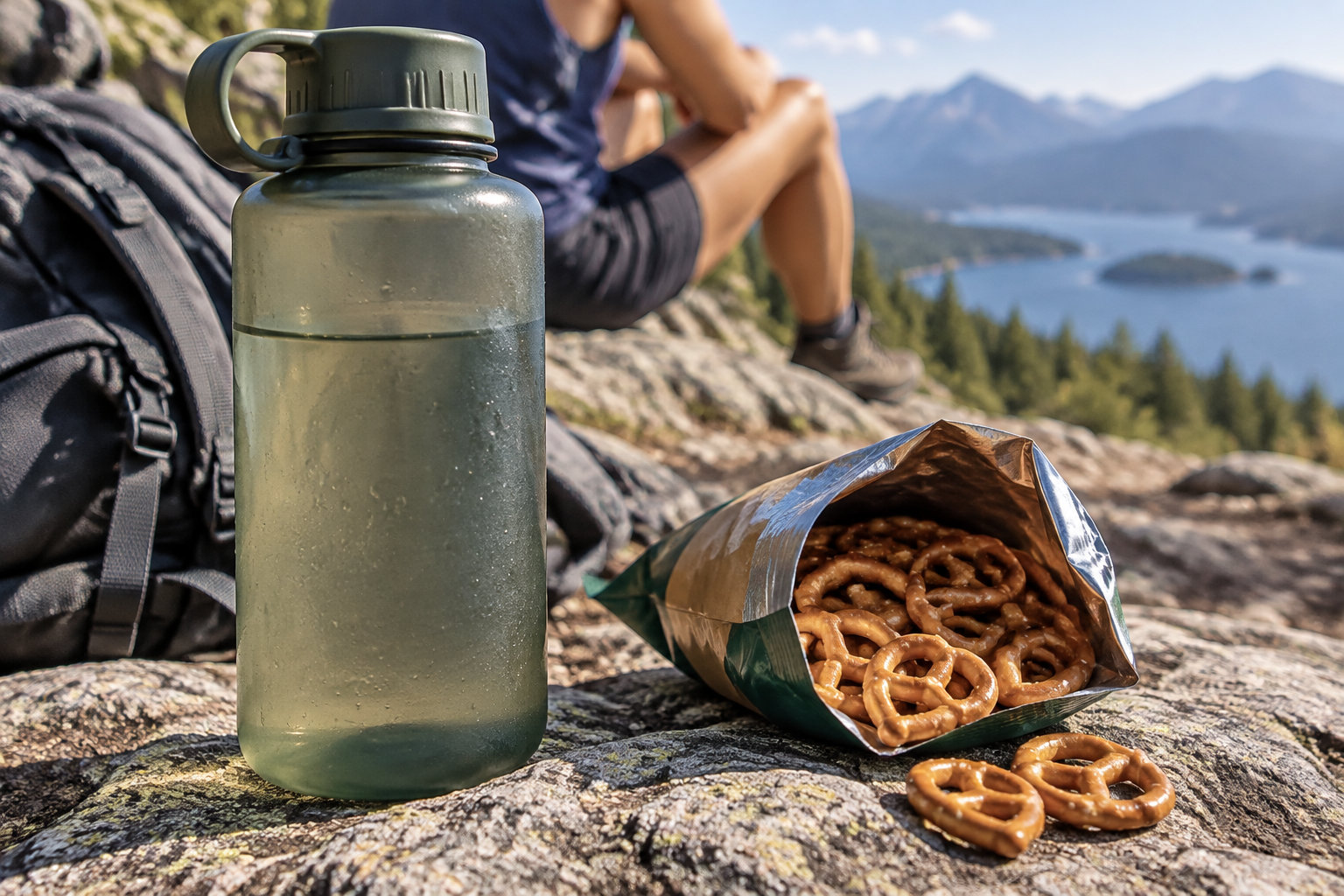
Plan your water from route length and conditions. An average walker needs 5.7 to 7.6 liters, more on a long or hard hike.
Check Pacific Crest Trail day hikes before you go, then follow these steps:
- Drink at least 0.95 liter of water every two hours of hiking.
- Pack salty snacks like pretzels, trail mix or energy bars, and eat them at each break.
- Stop in the shade to drink, eat and cool down.
Turn-back check
- Note how much water you carry at the start.
- At each break, check what is left. If half is gone, turn back.
- Count your trips to urinate. Fewer than usual can mean heat exhaustion, so stop in the shade and turn back.
Clothing, sun protection and ways to cool down
Wear loose, light-colored clothing. Polyester and nylon wick sweat away from the skin and dry fast. Wool also wicks moisture and dries fairly fast. Skip cotton: it soaks up sweat and dries slowly.
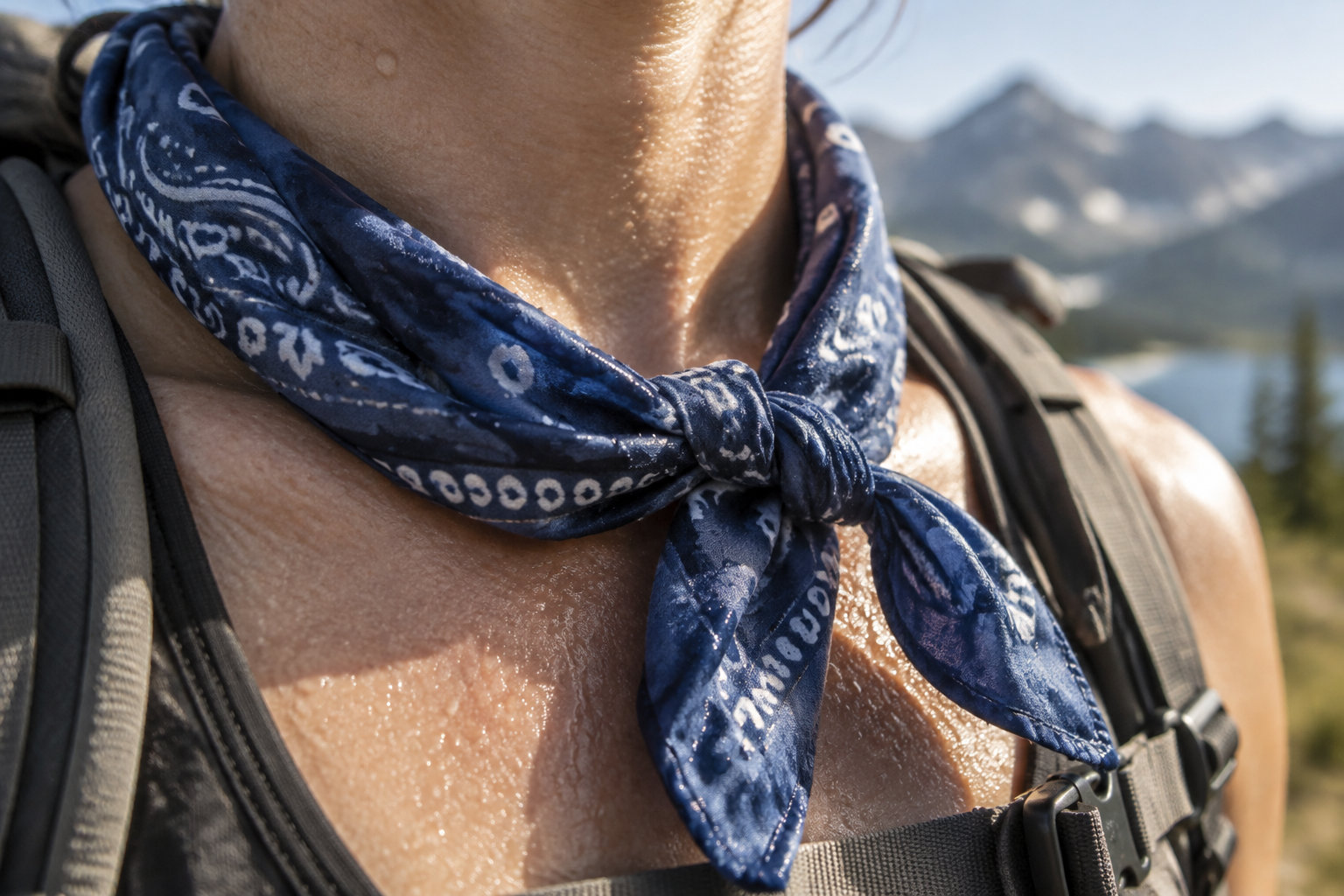
Add a wide-brim hat and UV sunglasses. Choose shoes with good grip for rocky or slippery trails.
For long hikes in the open, like Joshua Tree trails, protect your skin with these steps:
- Choose a broad-spectrum sunscreen with an SPF of at least 30 and water resistance.
- Reapply every two hours and after sweating, even if your skin feels dry.
- If you swim, reapply after 80 minutes in the water.
Cooling down
What works
Keep a shirt or towel wet so evaporation cools you.
What to avoid
Don’t sit still in a wet shirt: the air has to move over it.
What works
Change socks as soon as they’re soaked with sweat.
What to avoid
Don’t keep hiking in soaked socks: they cause blisters.
Heat exhaustion or heat stroke: how to tell them apart
Heat exhaustion: the early warning signs
Heat exhaustion comes first. Stop, get into shade and cool down early, and it reverses quickly. Heat stroke is different: confusion, slurred speech or fainting means calling 911 now.
Dogs overheat too, so cut the hike short if yours pants hard. With a dog, pick dog-friendly trails in Los Angeles and keep the route short.
Early heat exhaustion shows up in the body before it becomes serious.
| Sign | Others may notice | You may feel |
|---|---|---|
| Skin and sweat | Cold, damp skin, heavy sweating | Drenched in sweat |
| Fluids | Little urine | Intense thirst |
| Head and balance | Stumbling, fainting | Headache, dizziness, weakness |
| Stomach and muscles | Vomiting | Nausea, cramps |
| Mood | Slight confusion | Irritability |
Heat stroke: the emergency signs
Look for confusion, slurred speech, loss of consciousness or convulsions. These are emergency signs, and the person needs medical help without delay, even if the hike is nearly over.
Check the skin too. It can be hot and dry, or the person can be sweating heavily. A core temperature of 41 °C or more, with a clearly altered mind, is a strong sign of heat stroke.
If you keep walking without a break or without cooling down, heat exhaustion can progress to heat stroke. Any sign that gets worse means you stop hiking right away, not at the next viewpoint.
Acting fast on the trail and turning back early
Stop hiking right away. Move the person into shade, loosen their clothing, and cool them with water or wet cloths.
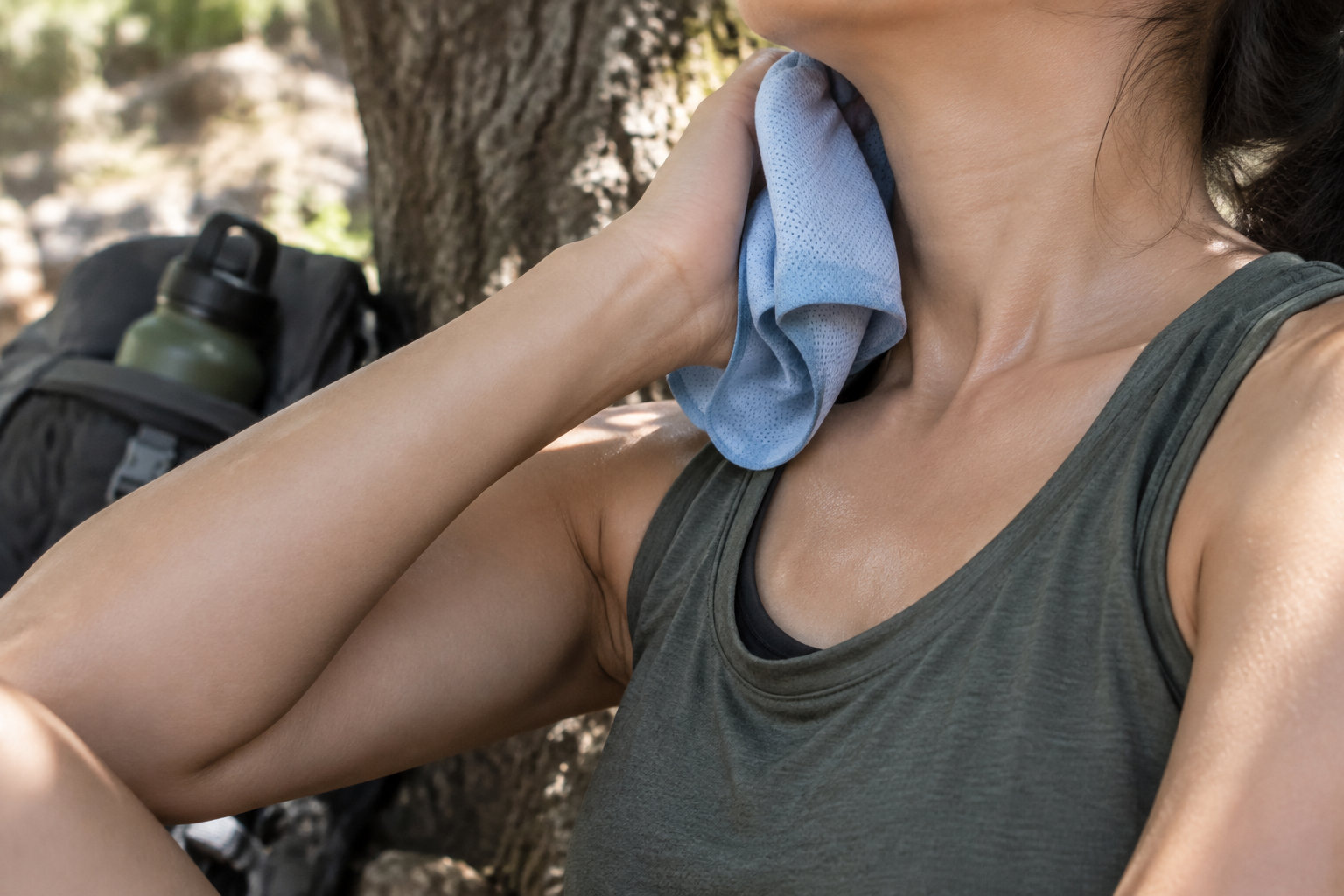
If they are fully awake and can swallow, give small sips of cool water. Call for help if they get worse, faint, or cannot drink.
If you suspect heat stroke:
- Call 911 with your location and the person’s signs.
- Stay with them. Do not leave them alone.
- Put cold cloths or ice on the head, neck, armpits and groin.
- Keep air moving around them.
- If they are unconscious, keep their airway clear.
Before you go
-
Start at dawn in pairs
Climb before sunrise. Success: the big climb ends before midday.
-
Tell someone your route
Share your return time. For a long climb, see the Vivian Creek route.
-
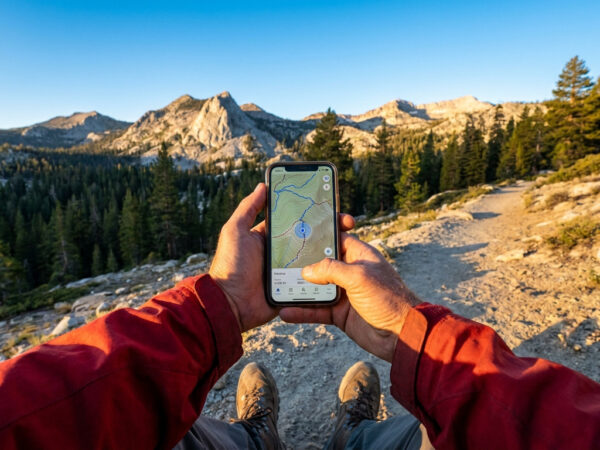
Carry a charged phone and a map
Success: you can navigate if the battery dies.
Check the HeatRisk map for your trailhead before anything else. If the day is red or magenta, skip the hike. Otherwise, start at dawn, carry more water than you think you need, and turn back once half is gone.
Your next step: choose one short, shaded route, check its water and alerts, and set your alarm for an early start.
Frequently asked questions
Do fit people tolerate heat better?
Not necessarily. Fitness alone does not protect you from heat. Your health, your experience with hot hikes, and the effort you plan matter just as much. A fit hiker pushing hard in the heat can still overheat.
Can heat exhaustion happen on a cloudy or cool day?
Yes. A cloudy or cool day can still cause heat exhaustion, because what matters is whether your body can shed the heat it makes.
A hard climb keeps that heat building, and humid air slows the sweat that cools you. Slow down at once.
Is it safe to hike at night to avoid the summer heat in Southern California?
It can be, but only where night hiking is allowed, so check the park and trail rules first.
Night does not cancel the heat. You still work hard, and humid air still slows the sweat that cools you. Bring a headlamp.
Are dry heat and humid heat equally risky for hikers?
No. Humid heat is riskier, because moisture in the air slows the evaporation that cools your sweaty skin. The same temperature is harder on your body. On humid days, slow your pace and take shade breaks more often.